
The Living Clean Guide to Avoiding Glyphosate and Other Bad Stuff in Foods (Part 6) – Pantry Staples


Massa Organics Raw Almonds
February 1, 2017
By Lisa Petrison, Ph.D.
This is part of a discussion of exceptional food products that may be worth considering by those who would like to really enjoy eating while simultaneously avoiding the large amounts of glyphosate, mycotoxins and various other poisons that are pervasive in the modern food supply (and in particular in the modern U.S. food supply).
Introduction goes here.
Introduction goes here.
Introduction goes here.
Introduction goes here.
Introduction goes here.
Introduction goes here.
Introduction goes here.
Introduction goes here.
Introduction goes here.
All products listed in this article are both organic and gluten-free unless the following notations are present:
(1) – Item may contain gluten or gluten cross-contamination.
(2) – Item may contain products that were grown with non-organic herbicides/fungicides/insecticides (or where the involved animals may have consumed such products).
(3) – Item consists of dairy or meat from a largely grass-fed animal receiving some supplemental feed, including a small percentage of feed with the potential of having been glyphosate-contaminated.

Legumes
Packaged beans and beans are a category that I never have put much thought into before. The only thing that I was pretty sure of was that soaking beans overnight was really important (in order to reduce the antinutrients, mycotoxins and other toxicity). In terms of taste though, it always seemed to me that quality products were all pretty much the same.
Therefore, when I first saw information about this new Jovial product, grown in Italy and shipped in glass jars across the ocean, it seemed like a little bit of wasteful overkill to me. But I decided to give their chickpeas a try, in a direct comparison against the best quality canned chickpeas and the best quality dried chickpeas (cooked) that I could find.
There actually was a pretty big difference. The Jovial chickpeas were smaller and substantially more flavorful, in a vaguely sweet earthy way. I found that there actually is a purpose in adding these to a chopped salad or a pita sandwich, other than for the consistency or as a protein source or as an inexpensive filler. They do change the taste, for the better.
Jovial is also offering in bottles cannellini beans (small white Italian beans that I also sampled and enjoyed) and borlotti beans (also known as Italian cranberry beans or Roman beans). The products are grown on Jovial’s farm in Tuscany and then soaked overnight before being bottled.
Despite the fact that I now think that Jovial’s prettily bottled beans are superior in taste, Eden’s organic canned beans (which also are soaked overnight before being cooked) are quite good too. For instance, they are perfectly suited to showcase by simply roasting them in olive oil – a dish that blows just about any other “quick meal” that I can I think of out of the water. (I sprinkle them with a little pre-mixed seasoned salt rather than fussing with all those different spices, and then add a touch of maple syrup after they’re cooked.)
I think that the dried chick peas that I have been using – sold by Hunza Natural Foods in Wisconsin via Amazon – are actually pretty good quality compared to most dried beans I have previously encountered, but probably I will continue to use them just for casseroles, soups and hummus into the future.
While some people do have problems digesting beans (the soaking should help), a bigger issue for most Americans is likely a lack of knowledge and imagination in terms of preparing beans in enjoyable ways. Here are some easy and yummy-looking recipes for canned chickpeas and canned beans that I am going to focus on trying.

Nuts
To my knowledge, nuts rarely have much glyphosate contamination, but there is the strong potential for them to be contaminated with aflatoxin or other mold toxins.
Brazil nuts seem especially likely to be moldy, to the point that I have given up on eating those entirely. I occasionally have run into obviously moldy cashews, walnuts or pecans as well.
Supposedly pistachios also can be moldy, but (purchasing mostly high-quality pistachios) I have not personally found that to be a problem. Almonds seem somewhat less likely to have mold issues than other nuts, from what I can tell.
Organic nuts tend to be quite expensive and are not always available. I do purchase organic nuts most of the time, but periodically eat higher-quality non-organic nuts as well.
I’ve had fewer problems with reactions to whole nuts than I have to nut butters, presumably because some manufacturers hide moldy or otherwise sub-optimal nuts by grinding them into butters. Still, quality is very important in this category.
Toxicity of all kinds in nuts may be reduced by soaking them in water for a few hours or overnight. The nuts then may be ground into nut butters or nut milks, or may be redried into whole snacking nuts in a warm oven or food dehydrator.
My favorite nuts likely are the raw or roasted almonds from Massa Organics. That farm seems to be at least as concerned about toxicity as I am, and it shows in the quality of all their products – in the brown rice, in the almond butter, and in the nuts themselves. The prices (currently $12-14 per pound) are not even that unreasonable. Highly recommended.
I’m also especially fond of the nuts from Santa Barbara Pistachio Company, which come in a variety of organic flavors and always have been fresh and delicious when I have purchased them.
Although I have not tried every type of nut from all the other companies listed here, and though nuts may vary from batch to batch, so far I have had good luck with nuts from the other companies listed here as well.
I also had such good luck with all the pecans I ate while living in southern New Mexico that I would be pretty confident about buying any fresh pecans from that area, whether labeled organic or not.
For spiced mixed nuts, Nana Joes sells a good version (flavored tastily with maple syrup, orange juice, sea salt, cardamom, nutmeg and vanilla). These are such a treat that it makes me want to experiment with making my own version.
Wilderness Family Naturals sells a wide variety of nuts – some of them soaked and then dehydrated to reduce toxicity – that I have yet to try.
Nana Joes Orange Spiced Mixed Nuts
Santa Barbara Pistachio Company Pistachios
Seeds
Seeds (including grain-like seeds such as quinoa) seem to be less likely to have toxicity issues than either nuts or grains, and many people report tolerating them pretty well in comparison to nuts or grains.
Quality is still really important in this category though, and some manufacturers are much better than others. I have used the products from the companies listed below repeatedly and it is my feeling that they are providing reliably good products.
One additional product that I have purchased a few times is Bob’s Red Mill Flax Seeds. However, that is the only product from that company that I am currently willing to use, because it has been my experience that the quality of their other products across the board has not been as high as I would like.
Braga Pumpkin & Sunflower Seeds
Woodstock Flax/Sunflower/Sesame/Pumpkin Seeds

Nut & Seed Butters
Although it is nice for nut butters to have been produced organically, an even bigger threat (especially with peanut butter) is contamination with aflatoxin or other mycotoxins. For that reason, it seems important that companies producing nut butters be taking particular care that the ingredients are fresh and non-moldy.
As a general rule, sunflower seed butter tends to be less likely to have mycotoxin contamination than nut butters and can be a good alternative for those who have problems tolerating nuts regardless of the reason. It also is much less expensive than most nut butters.
Although I have at times had negative reactions to eating nut butters, I have done really well with all the products listed here and have heard good reports about them from others.
One product that I especially like is Massa’s Almond Butter, which is produced from almonds grown on the owners’ small, fastidiously organic farm near Chico, CA. The almond butter is ground in small amounts (into smooth and crunchy varieties) on a regular basis to fulfill mail orders and for sale at local farmers’ markets, and it tastes really fresh and pure and naturally sweet to me.
Artisana sells a variety of raw nut and seed butters, including walnut, cashew, pecan, almond and tahini. They are very high quality and are priced accordingly. Unfortunately my favorite product of theirs – the macadamia nut butter – has been discontinued.
NuttZo produces butters from two different blends of nuts and seeds (such as almonds, cashews, Brazil nuts, flax seeds and hazelnuts) – one with peanuts and one without. The products are both flavorful and clean-tasting (though also fairly expensive).
Once Again is a somewhat more affordable line of organic almond, cashew, peanut, sesame and sunflower seed butters that I have done well eating on many occasions.
I also have tried most of the flavors of Justin’s Nut Butters and done well with that brand, even though the nuts are not organic. A big plus for me is that these products are widely available in single-serving travel packs, making them a convenient snack (especially when paired with an apple or some crackers).
I recently purchased a jar of Jiva raw organic tahini and thought the quality was pretty good, so I would be interested in trying the other organic nut and seed butters from that company.
Wilderness Poets offers a selection of raw nut butters in interesting flavors, including macadamia nut, pistachio and pumpkin seed. I would really like to try some of those.
A few other nut butter companies whose products I have yet to try are Dastony, Jem and Wilderness Family Naturals.
NuttZo Seven Nut & Seed Butter

China Ranch Date Farm in Tecopa, California.
Dried Fruits
Dried fruits tend to become moldy very easily during the drying process if particular care is not taken in using only good fruit to begin with and then following proper drying procedures.
I have had problematic experiences with many dried fruits, including quite a few fruits labeled as organic. Choosing quality brands is important in this category, therefore.
I first got excited about the dates from China Ranch when I was spending time at Death Valley National Park. They were pretty much the only quality item stocked in the small grocery store there, and I was surprised at how delicious they were.
Subsequently I lived one winter near China Ranch at the hot springs in Tecopa, CA. The ranch is a really beautiful place with some nice hiking, and the dates (which also are available by mail order) are incredibly good. Date shakes are a specialty there and it could be worth a try making them at home.
Braga is a central California grower of pistachios and also sells a variety of other growers’ nuts and dried fruits through mail order. I have found their raisins and cranberries to be quite good. They also sell dates, which I have not tried.
Eden sells dried cherries, blueberries and cranberries (organic or “transitional”) that I have enjoyed.
Although I have tried only a few of Navitas’ products, I do really like their goldenberries (which are also known as Cape gooseberries). They are fairly tart and feel to me like they are super-full of antioxidants.
I’ve frequently purchased nuts, seeds and fruits from Tierra Farm through local healthy food stores and have found all of their products (including the dried fruits) to be of good quality at reasonable prices. They also sell in small quantities via mail order.
A wide variety of dried fruits that I have not tried yet are offered by Wilderness Family Naturals.
Braga Dried Cranberries & Raisins
Eden Dried Cranberries, Blueberries & Cherries

Coconut
Coconut has a great many health benefits and is an antifungal, but it also has the potential of being mold- and mycotoxin-contaminated. This apparently is mostly due to mold growing on the coconut shells and then contaminating the product when the shells are opened.
Although companies that are concerned with product quality may be more reliable with regard to the mycotoxin issue, I have heard scattered reports even of those that pride themselves on offering products that are non-toxic in other ways selling coconut with obvious mold issues. Unfortunately, despite the thousands of papers on mycotoxin dangers in the literature, some people who should know better still tend to underestimate their importance.
I personally have not had a problem with the Let’s Do Organic line of coconut products and have heard mostly good reports about it from others. The company makes a variety of products, including creamed coconut (aka coconut butter); shredded and flaked dried coconut; coconut flour; coconut cream; and sweetened condensed coconut milk.
Native Forest (which – like Let’s Do Organic – is owned by Edward & Sons) sells canned coconut milks that also seem to be consistently pretty good quality. They can be used to make quick coconut milk for drinking purposes and also are especially useful for making curries.
(I recommend starting off by using coconut milk in the Anti-Inflamatory Cauliflower Curry featured on the Living Clean in a Dirty World blog a while back – it’s a delicious dish!)
Native Forest also makes a Vegan Coconut Milk Powder that I have not tried.
Tierra Farms offers some dried coconut products that I have liked (plus the quality of their products seems good across the board).
Nutiva makes coconut flour that I have yet to try but that I would guess is really good based on the quality of the company’s coconut oils and coconut manna.
Wilderness Family Naturals and Tropical Traditions also produce a wide range of coconut products that I have yet to try.
Let’s Do Organic Coconut Products

Coconut Butter
Pureed coconut goes by a number of descriptive names, including creamed coconut, coconut butter and coconut manna. It can be used as the basis for homemade coconut milk, to add depth to soups, in baked goods or smoothies, or just eaten on its own.
Artisana and Nutiva both sell very good coconut butters in jars, and Nutiva put together a guide on how to use it.
A challenge with coconut butter is unless the environment is very warm (such as above 80 degrees), the product tends to separate and to get very hard. It then will need to be warmed up (such as by putting it into a hot water bath or a warm oven) in order to bring it back to a spoonable consistency.
For this reason, I really like the single-serving Artisana Coconut Butter Squeeze Packs (of about an ounce). Even if the coconut butter in these gets hard, it can be softened by kneading it by hand for a while before opening the package. They are on the expensive side though (about $2 per package).
When convenience is less of a concern, I suggest considering Let’s Do Organic creamed coconut.Inside the box is a plastic pouch filled with seven ounces of coconut butter, which likely will be rock-hard and need to be softened by letting it sit in hot water for a while. The package then can be opened and transferred to a different jar or used all at once. Admittedly this is a little bit of extra work, but it is much less expensive than the other products and I have found the quality to be just as good.
Once coconut butter has been softened, it is easy to convert it into homemade coconut milk by mixing it with water in a blender or a shaker jar. The amount used could be anywhere from 1 to 3 tablespoons per cup, depending on the thickness desired.
Personally, while I like the thickness and creaminess of homemade coconut milk, I find the taste to be a little overwhelming to use on its own. I think it is much better when it is balanced with nut or seed butter.
Following are instructions for how I usually make nut-and-coconut milk, though I suggest that experimenting with the proportions of all the ingredients.
I tend to use this mostly when on the road since good cow’s milk is not easily available and so am suggesting a shaker jar, but of course a blender could be used as well.
For about 8 ounces: 1) Put jar containing coconut butter in a hot water bath until coconut butter is softened (or knead squeeze packet until softened). 2) Put one tablespoons of creamed coconut and one tablespoon of nut/seed butter into a shaker jar. 3) Add about 1/2 cup of hot water and shake vigorously until smooth. 4) Stir in additional cold water (1/2 cup or more) until the consistency is as desired.
For 1+ quarts: 1) Put Let’s Do Organic Creamed Coconut plastic package in hot water until softened, then cut open the plastic package and squeeze contents into a one-quart Mason jar. 2) Add 2-4 tablespoons of nut or seed butter plus 1 cup of hot water and shake vigorously. 3) Add cold water to make one quart. (Note that the consistency of this very well may be too thick, and so I suggest stirring some additional cold water into the first cup and also into the jar until thickness is as desired.)
Although almond milk is nice in these recipes, other nut or seed butters (including much less expensive ones such as sunflower seed butter) work well too.
Let’s Do Organic Coconut Products

Cocoa
I often mix cocoa with coconut oil and honey, to make a healthful chocolate that firms up nicely when it is spread on waxed paper and kept in the refrigerator.
If cocoa butter is used instead of the coconut oil, then the mixture can be molded into little candies, such as these adorable chocolate bears created by Julie Genser of the EI-oriented website Planet Thrive.
(Unfortunately I have not yet found a cocoa butter that I have been very happy with, and so am especially open to suggestions about brands.)
I’m starting to think the best cocoa out there may be Rapunzel, which is from Germany. It tastes good to me and I always have done well with it.
I also have liked Bulletproof chocolate powder, which is guaranteed to be low in mycotoxins.
Dagoba cocoa also has seemed fine to me on the one or two occasions I have tried it. (Despite the fact that Dagoba was purchased by Hershey in 2006, their products have felt pretty good to me across the board, especially considering their price point.)
I also have received some positive comments about the cacao products from Wilderness Family Naturals but have yet to try them.

As far as I have been able to determine, none of the Fiorafruitta fruit preserves from Rigoi di xxx contain any citric acid or ascorbic acid.
Preserves
In my opinion, the main reason to eat preserved fruit is to be able to get a burst of intense fruit taste and polyphenols during times of the year when fresh fruit is not as readily available.
Because non-organic fruit may be contaminated with glyphosate as well as many other chemicals, I strongly prefer that any preserves that I eat be organic (certified or non-certified), pesticide-free, or made from wild fruit.
Equally important is that the preserves be made when the fruit is still fresh, rather than starting to rot. Of course, this is information that is impossible to get just by asking about it, meaning that judgments about quality in this category are by definition especially subjective.
All things being equal, I prefer products that have a minimal amount of added cane sugar (and, of course, no beet sugar or other sweetener that may contain glyphosate) and that do not include citric acid.
Some of the best fruit preserves that I have encountered have not been labeled as organic though, and so that is less important to me.
Probably my favorite all-around brand of preserves is the Fiordifrutta line from Rigoni di Asiago. These are from Italy; are certified organic; contain only fruit, fruit juice and pectin (with no added sugar or citric acid); have bright and delicious flavors; and are sold at a reasonable cost through Vitacost. I’ve tried several different flavors and enjoyed all of them.
Also from Italy and very similar to Rigoni di Asiago – but a little more widely available in regular grocery stores – are the organic fruit spreads from Bionaturae. Although citric acid and/or ascorbic acid are listed as ingredients for most of these fruit spreads (except for the bilberry version), the company seems to be being relatively careful about the sourcing and I have had consistently good experiences with the products.
Stonewall Kitchen is now making a few certified-organic items, and I have tried several of their organic preserves. The Strawberry Vanilla Jam was one of the best preserves that I have had in my life (and I don’t even usually like strawberry jam that much!), in terms of both the quality of the fruit and the flavor combination. The Maine Blueberry Cherry Jam also was quite good. Both of these contain cane sugar but no citric acid or other preservatives.
Two of the other new organic jams from Stonewall Kitchen do contain citric acid but nonetheless tasted very good to me. The Maple Apple Onion Jam goes great with pork chops or sausages or pulled pork (or with a little cooked bacon added it is wonderful with just about anything). The Sweet Chili Jam also is very interesting and makes a nice addition to grilled cheese sandwiches.
Stonewall Kitchen also is offering an organic fig jam that I would really like to try.
I occasionally have enjoyed Eden’s organic cherry butter, which is a little expensive but also quite delicious. I’m interested in trying their grape butter as well. The preserves contain nothing but pureed fruit and apple juice – no pectin, sugar, citric acid or anything else.
The Native American company Red Lake Nation produces a selection of non-organic jellies and syrups from hand-harvested wild fruit growing in northern Minnesota. I have tried all their varieties – blueberry, plum, grape, highbush cranberry, hawthorn and the award-winning wild chokeberry – and have found them all have very intense flavors and to feel clean to me.
Often I will take a teaspoon of one of these jellies and, Russian-style, stir it into a cup of strong black tea.
In addition to the fruit, the Red Lake Nation products contain cane sugar, fruit pectin and citric acid. There is a moderate shipping charge for mail orders, but the items arrive quickly via Fed Ex and are carefully wrapped to protect against breakage.
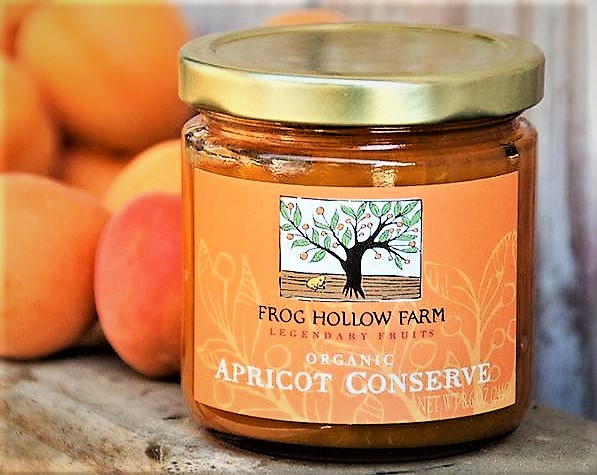
Happy Girl Kitchen and Frog Hollow are two small northern California companies making wonderful jam, marmalade and chutney from extremely high-quality local fruits. These products are incredibly delicious and make nice hostess gifts. They contain organic sugar but are only moderately sweet compared to conventional preserves.
(Frog Hollow’s fresh fruit is also spectacularly good, and I suggest seeking them out at farmers’ markets and certain retailers in the San Francisco/Santa Cruz area if the opportunity arises. Also, Happy Girl runs a really nice organic vegetarian restaurant in Pacific Grove that is worth a stop if in the area.)
Once in a while on more ordinary occasions, I am in the mood for marmalade and have found the one offered by Mediterranean Organic to be pretty good. In addition to the fruit, it contains organic sugar, fruit pectin and citric acid.
Mediterranean Organic also offers a variety of other preserves. The ones that I have tried have seemed basically okay, although probably I would not purchase them again unless the other items mentioned here were not available.
Similarly, the Crofter’s line of organic preserves has seemed to me acceptable in terms of the quality and is widely available. It includes a few biodynamic items, which is nice to see. Still, I probably wouldn’t purchase these preserves again unless none of the other items discussed above were available.
Two popular lines of non-organic French preserves that are widely available in the U.S. are Bonne Maman (which is Non-GMO Project Verified and contains cane sugar) and St. Dalfour (which is sweetened only with fruit juice). These products are all free of citric acid and get very good customer reviews, and I have enjoyed them quite a bit when I have tried them. While I suspect that the French are not using too much glyphosate on their fruits these days, I wonder what other kinds of chemicals might be used on them. Therefore, while I like these companies’ products enough that I probably would eat some if served them by someone else, I’m a little hesitant to actually buy them myself or to recommend them to others at this time.
I also have come across in my travels many other small companies making preserves with local organic or pesticide-free fruit, and those products are almost always very good. Provided that their makers can assure me that they are using cane sugar (which is virtually always the case), I almost always buy a jar or two without regret.
Recommended:
Frog Hollow Spreadable Fruit (3)
Happy Girl Kitchen Jams & Marmalades
Mediterranean Organic Preserves (3)
Red Lake Nation Foods Wild Fruit Jellies (1, 3)
Rigoni di Asiago Fiordifrutta Fruit Spreads
Stonewall Kitchen Preserves (3)
Sweeteners
Virtually all of the time, I use only honey or maple syrup as sweeteners.
Processed sugar (regardless of whether it is from cane or coconut or agave) does not feel very good to me, and artificial sweeteners – including xylitol and similar substances – feel totally poisonous.
I am aware, of course, that many people – including some folks that I greatly respect – are taking the position that xylitol is a healthful alternative to sugar. Nonetheless, my own feeling is that it is a scarily heavily processed product that even in the preferred non-GMO form is made from a substance – wood pulp! – that people are not supposed to be eating, and therefore that my intuitive feeling that it is a really bad thing for me likely has some merit to it. A number of people – including Dr. Axe, Natural News and The Healthy Home Economist – have listed some specific issues with this substance that add to my concern about it. Therefore, while I might consider using small amounts of it as an alternative to even more toxic medications, such as in nasal spray form, I don’t think eating it as a food is a good idea.
While I don’t feel that natural stevia seems toxic, it tastes so bitter to me that I would prefer not to have any sweetener at all. This appears to be a genetic issue, and so don’t think that others need to avoid it if they find it to be enjoyable. (I would still be very inclined to avoid the more processed versions of it though.)
One of the reasons that I decided to stop paying any attention at all to trendy dietary advice and instead to stick scrupulously to consuming only natural foods that humans have been eating for hundreds or thousands of years was the story of agave, a heavily processed sweetener that was considered a wonder food by many health-oriented thought leaders for a few years but now seems to be viewed as substantially worse than white sugar. I never ate much agave to begin with because I just plain didn’t like it, and now do actively try to avoid it.
Although some of the products that I purchase include organic sugar or cane sugar in their ingredients, they are not items that I use very frequently. I usually wish that they were instead made with honey or maple syrup, because then I would feel a lot better about them.
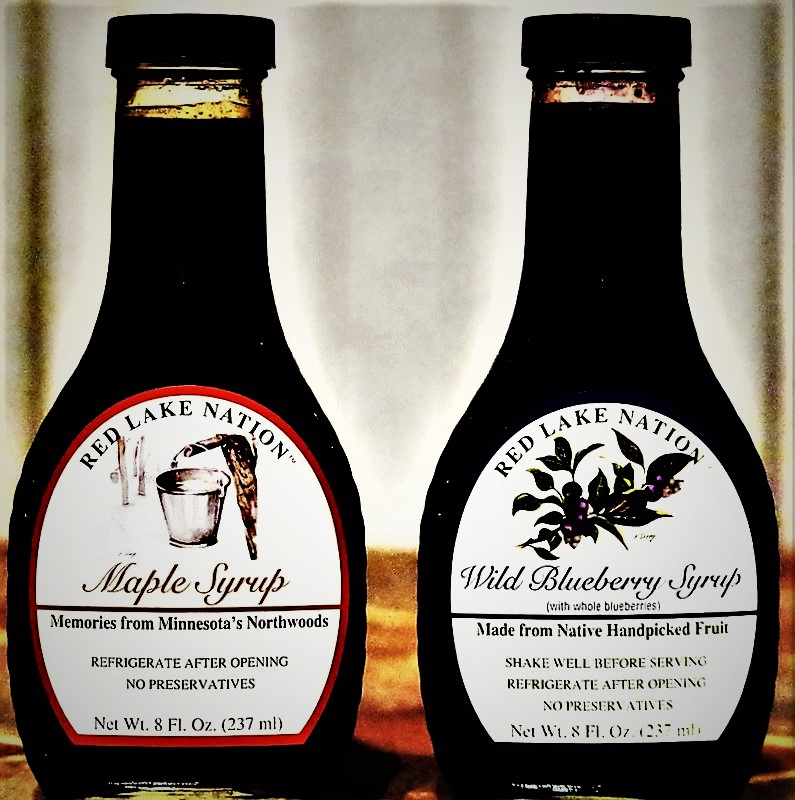
Now, all that being said, I will admit that the Red Lake Nation Wild Blueberry Syrup – made from wild fruit that is hand-harvested by Chippewa Indians living in the far reaches of northern Minnesota – is very likely the best sweetener of any kind that I have encountered in my whole life.
The syrup does have some cane sugar in it. However, mostly what I am noticing with it is the rich, intense flavor of the wild fruit. I had no idea that blueberries could taste so remarkable – it’s like every blueberry I have previously come across is just a pale copy in comparison.
Red Lake Nation also produces syrups from four other varieties of local wild fruit: wild plum, wild chokecherry, wild grape and wild highbush cranberry. I tried out the first two in jelly versions and really liked them, but now I want to order all of the syrups and try them out.
(And then maybe open an organic gluten-free pancake restaurant featuring the syrups as the centerpiece. If they all are as good as the blueberry one, I think that kind of venture could be a big hit!)
In addition, Red Lake Nation sells a maple syrup harvested from the same area in Minnesota as the wild fruit. I had always thought that all maple syrup was basically the same, but when I compared this maple syrup against two other products that I had thought were really good, this one blew them away in terms of the richness and complexity of the flavor. So now I would really like to go visit this part of Minnesota where the land is still fertile enough to be producing all these intense flavors.
In the past, I have purchased maple syrup either from local artisan producers or from slightly larger organic producers. One company that fits into both of these categories for me is Great River, an organic producer located in Iowa that runs a mail-order operation. I also have been satisfied with the organic syrup from Coombs Farms, which is based in Vermont.
The local Iowa brand that I use most often and really enjoy is Big Timber, but I do not think they are set up for shipping.
I’ve been concerned quite a while about glyphosate contamination of honey due to the fact that bees may pollinate crops that have been sprayed with glyphosate, and recent research suggests that cross-contamination indeed does frequently occur.
Organic honey requires that the apiary be located in the middle of a chemical-free region that is 22 miles square (because bees can fly almost two miles to get food), which explains why so little honey is certified organic.
Another factor is the attitudes of the beekeepers – for instance, while some ask their neighbors when they will be spraying their crops and release the bees at different times, others are much less concerned.
Despite all these issues, I seem to have had some good luck buying honey from some local producers, including ones here in the agricultural Midwest. Recently I have been using Honey Bunny Honey from the local company Leonard Apiaries, a company operating in Iowa and Wisconsin, for instance.
For raw honey available through mail order, the products from Heavenly Organics – which are said to be obtained from bees located in remote forests in India and which are certified organic – have tasted and felt okay to me. Buying honey shipped in glass jars from the other side of the world is sort of the opposite of local and sustainable though.
I also once purchased some raw honey from YS Organic Bee Farms that felt okay to me.
A final sweetener that I tried once and thought was pretty good is the organic ginger syrup (sweetened with sugar) from Ginger People.
I do generally have a bag of regular organic cane sugar sitting around, which I use mostly for my periodic attempts to make kombucha and occasionally add in tiny amounts to Asian sauces. Wholesome Sugar and Woodstock Sugar are two brands that have felt okay to me.
Maple Syrup:
Red Lake Nation Maple Syrup (2)
Honey:
Fruit Syrup:
Red Lake Nation Wild Fruit Syrups (2)
Cane Sugar:
Links on this page are in orange (no underlining).