
The Living Clean Guide to Avoiding Glyphosate (And Other Bad Stuff) in Foods – Overview


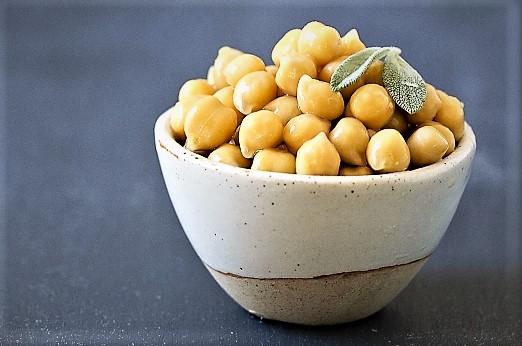
Jovial Chickpeas
October 1, 2020
By Lisa Petrison, Ph.D.
In Summer 2010, I returned to the Midwest after having spent almost two years living mostly in a tent or an RV in the most pristine places that I could find in the western half of the U.S.
Article Series Links
Vegetables, Fruits & Mushrooms
Part 1 – Introduction
Part 2 – Vegetables, Fruits & Legumes
Part 3 – Dairy, Eggs, Fish, Meat & Tofu
Part 4 – Fats & Oils
Part 5 – Grain Products
Part 6 – Pantry Staples
Part 7 – Condiments & Seasonings
Part 8 – Convenience Foods
Part 9 – Beverages
Part 10 – Desserts & Sweets
Part 11 – Restaurants, Stores, Supplements & Supplies
Appendix – Glyphosate Research Literature

A vineyard in the Bordeaux region of France.

A Lundberg wild rice mix.
Avoiding Glyphosate & GMO’s
Following is a basic rundown of the types of toxins that tend to be present in various food types. More details will be discussed in the subsequent parts of the blog.
Roundup Ready Crops: Types of plants that have been genetically engineered to not be killed by applications of glyphosate and that have been approved by the government for general use are corn, soybeans, canola, sugar beets, cotton and alfalfa. Any food product that contains any of these ingredients and that is not stated as being organic and/or GMO-free should be assumed to be contaminated with glyphosate as well as the genetically modified material. Of particular concern are the hidden ingredients in oils (since corn, soy, canola and cottonseed oils are commonly used in many foods) and sweet items (since both corn syrup and unspecified “sugar” both can be obtained from Roundup Ready crops).
Bt Insect Resistant Crops: Several crops have been genetically engineered to produce their own pesticides to prevent them from being eaten by insects. The main ones in use are corn and cotton – thus providing an extra reason to avoid those crops beyond the likelihood that they will be contaminated with glyphosate. (There also is Bt eggplant that has so far received approval for use only in Bangladesh.) I feel just as uncomfortable eating food that is genetically engineered to make its own insecticide as I do eating glyphosate, and so have an extra reason to avoid conventional corn products and cottonseed oil.
Other GMO Crops: The huge potato company J.R. Simplot Co. has been trying to create and sell GMO potatoes under the “Innate” name for some time now, and just got approval of a new version. These potatoes are not engineered to be resistant to specific pesticides or to create pesticides; rather, they are less likely to bruise, are more resistant to certain viruses, result in lower levels of acrylamide when fried, and have other supposed benefits. So far the Innate potatoes have been in very limited distribution, but conceivably that could change with this new approval. Similar GMO papayas and squash also have been approved in the U.S. (plus genetically modified drought-resistant sugarcane is being studied in Indonesia). Although I am somewhat less concerned about genetically modification of crops for reasons other than pesticide resistance or creation, I don’t feel that the whole area of GMO’s has been studied enough to feel comfortable eating these items either.
Glyphosate-Harvested Crops: Even if a crop is not Roundup Ready, it still may be exposed to glyphosate due to the spraying of the fields with the chemical just prior to harvest time, with the goal of increasing the yield by drying out the crop and causing it to ripen more evenly. Although most of the discussion about this has focused on wheat contamination, it actually is specifically allowed with regard to a very wide variety of crops, including vegetables and fruits as well as grains. What is especially important to note here is that while organic crops are not allowed to be treated with glyphosate in this way, there is nothing regarding the GMO-free certification that suggests that crops cannot be treated with glyphosate prior to harvest. To my understanding, this practice seems to be limited mostly to the U.S. (and is not used at all in some places such as Europe and Japan)). Therefore, avoiding glyphosate sprayed on the land for this purpose means either eating everything organic or buying food from countries where this practice does not occur.
Additional Glyphosate Usage: Regardless of whether crops being planted are Roundup Ready, Monsanto encourages the treatment of the fields prior to or during planting and subsequent to harvest, and also suggests that spot treatment of weeds between the plant rows can be done even while the plants are growing. While the subsequent glyphosate contamination of the soil may not be sufficient to kill the plant, that does not necessarily mean that the plants are not contaminated with the chemical. This therefore can constitute an additional way that non-GMO crops may be contaminated with glyphosate.
Strategies by Food Type
Following is a summary of my current approach to avoiding toxicity by food category. For the most part, this discussion focuses on avoidance of chemical toxins rather than mycotoxins. Although I do think that mycotoxins are important to avoid too, my experience is that insofar as I am sticking to brands that are free of chemical toxins and that are sold by companies that are focusing on quality, mycotoxins seem not to be much of a problem.
Roundup Ready Crops: This category includes all products with corn, soy, canola, sugar beet or cottonseed as an ingredient. These items are included in practically every mainstream food item in the U.S. (as a result of their being present in oils, sweeteners, starches and other hidden additives). Items that are specifically marked as organic are not supposed to contain either the Roundup Ready genetic material or glyphosate contamination. Items marked as “Project GMO Verified” are a question mark in my mind. I tend to think that most products in these categories that are non-GMO are not being treated with glyphosate (since this would seem to involve a purposeful deception on the part of growers); however, especially as the use of the “Project GMO Verified” label becomes more widespread, I would not necessarily assume that this can be counted upon.
Wheat: Wheat seems to be especially problematic because although it is not a Roundup Ready crop,in the U.S. it is not infrequently sprayed with Roundup just before harvest. Although this may only be happening with a minority of the non-organic wheat that is grown in the U.S., for the most part there is no way for consumers buying non-organic way to distinguish whether the wheat in products that they are buying was treated in this way.
Spot Weed Killer
Glyphosate was originally brought to market as a weed killer by Monsanto under the Roundup name in 1974. Roundup was unusual in that it had a particularly broad spectrum of action, killing virtually all plants that it came in contact with.
Roundup and other glyphosate products have been used so extensively since that time that certain weeds that are resistant to it have emerged. Still, it continues to have a broad spectrum of usage and is frequently used in agriculture to treat unwanted weeds that emerge.
Farmers that are using glyphosate on crops other than Roundup Ready ones need to be careful not to spray the plants directly, since the herbicide will kill them.
The glyphosate may be sprayed between the rows of the crops or on the edges of the field, however.
Some of this glyphosate may end up contaminating the crops as a result of dispersion in the soil or through rainwater.
Roundup Ready Crops
Much of the public focus on glyphosate usage is on crops that have been genetically engineered to be able to withstand the application of Roundup or other glyphosate-containing herbicides.
Following is a list of genetically engineered “Roundup Ready” crops that have been approved for use in the U.S. and certain other countries.
Soybeans:
Roundup Ready soybeans are used primarily for animal feed and for soy oil, but also have made their way into many other processed foods consumed by humans. Roundup Ready was approved in the U.S. in 1993 and now accounts for virtually all of the soybeans grown in this country. It also is grown in a number of other countries, including Argentina, Bolivia, Brazil, Canada, Chile, Costa Rica, Mexico, Paraguay, South Africa and Uruguay.
Cotton:
Roundup Ready cotton is primarily used as a textile product, but cottonseed oil may be used for industrial cooking applications as well. Roundup ready cotton was approved in the U.S. in 1994, and also is grown in Argentina, Australia, Brazil, Colombia, Costa Rica, Mexico, Paraguay and South Africa.
Maize:
Roundup Ready corn is used largely for animal feed and to make high-fructose corn syrup (as well as to create ethanol used as a fuel), but it also can be found in products such as corn oil, breakfast cereals and snack foods. It was approved in the U.S. in 1995 and now accounts for a large majority of the corn grown in this country. It is also approved in a number of other countries, including Argentina, Brazil, Canada, Colombia, Cuba, the Czech Republic, Honduras, Paraguay, the Philippines, Portugal, Romania, Slovakia, South Africa, Spain and Uruguay. Note that there are no Roundup Ready versions of either sweet corn or popcorn on the market at all.
Canola:
Roundup Ready canola is used mostly as a cooking oil and as a basis for margarine production. It was approved in the U.S. in 1995, and also is grown in Australia and Canada.
Sugar Beets:
Roundup Ready sugar beets are used to produce sugar that is used in a wide variety of processed foods. Sugar beets were approved as a Roundup Ready crop in the U.S. in 1998 and also are approved in Canada. Insofar as sugar used in these countries is not specified as “cane sugar” or “organic sugar,” it likely should be assumed to be made from Roundup Ready sugar beets.
Alfalfa:
Alfalfa is used almost solely as an animal feed. It was briefly allowed in the U.S. in 2005-2007 but then was withdrawn from the market. It was then re-approved in 2011 by the Obama Administration.
Pre-Harvest Dessicant
A third major use of glyphosate is as a killing agent, to dry out the crops and allow them to be harvested earlier in the season.
This usage was pioneered in Scotland in the 1990’s and the practice is now widespread in that country and in Canada. This type of usage also frequently takes place in Ireland, England and in parts of the northwest U.S.
The rationale for this usage is that allows a wider range of crops to be reliably harvested in wet, northern areas with short growing seasons.
Paleo Almond Butter Chocolate Chip Cookies:
Overview Articles
National Pesticide Information Center – March 2019
EPA – 2020
NPR – May 30, 2019
FDA – 2020
Web MD – 2021
Chris Kresser – June 22, 2021
Live Science – September 18, 2020
Journal Articles
Lawsuits
Sustainable Pulse – September 5, 2018
Contamination Studies
The Healthy Home Economist – May 24, 2018
Glyphosate News – May 2, 2018
The Guardian – April 30, 2018
The Organic & Non-GMO Report – April 4, 2018
Food Navigator – February 19, 2018
Moms Across America – February 15, 2018
Consumer Lab – November 11, 2017
FDA – November 6, 2017
The Cornucopia Institute – October 31, 2017
Beyond GM – October 9, 2017
Env Health – September 14, 2017
Care 2 – September 9, 2017
The New York Times – July 25, 2017
Health Freedom Alliance – 2017
The Epoch Times – December 23, 2016
Best Food Facts – December 9, 2016
Snopes – November 16, 2016
The Detox Project – November 14, 2016
Eco Watch – November 14, 2016
Genetic Literacy Project – July 21, 2016
Mercola – May 3, 2016
The Alliance for Natural Health – April 19, 2016
Mercola – April 12, 2016
Health Impact News – March 13, 2016
Food Babe – 2016
Food Democracy Now – 2016
Health Nut News – October 30, 2015
Health Impact News – November 3, 2014
Blood & Urine Levels
Nature World News – June 4, 2016
Eco Watch – May 12, 2016
Ag Mag – February 3, 2016
Usage By Country
Weedkiller Crisis – November 8, 2018
Organic Consumers Association – April 26, 2018
Glyphosate Residue Limits
U.S. Government Publishing Office
UK
Irish Examiner – February 27, 2017
Scotch Whiskey – August 25, 2016
The Herald – June 29, 2016
Politico – May 30, 2016
Soil Association – April 13, 2016
Scottish Government – September 8, 2015
Ireland
Independent – June 7, 2016
Europe
DW – May 18, 2016
Reuters – April 12, 2016
Germany
German Brewers Association – February 25, 2016
Taiwan
Eco Watch – May 27, 2016
Japan
Edmonton Journal – June 15, 2018
Canada
Green Med Info – May 30, 2015
The Western Producer – April 22, 2015
Pre-Harvest Dessicant
Nature’s Path – January 23, 2018
Eco Watch – March 5, 2016
Health Impact News – 2016
Tony Mitra
Glyphosate in Corn – February 8, 2017
Don Huber
The Organic and Non-GMO Report – 2010
Stephanie Seneff
Bulletproof – July 29, 2015
Alternet – February 27, 2014
Institute for Responsible Technology – March 10, 2013
Company Comments
Healthy Traditions/Tropical Traditions
Glyphosate Overview
Organic Lifestyle – September 20, 2018
Daily Mirror – June 27, 2018
Good Housekeeping – March 13, 2017
Fanatic Cook – March 10, 2016
Slow Food – March 3, 2016
Roundup Pre-Harvest Staging Guide
National Pesticide Information Center
European Food Safety Authority
Glyphosate Avoidance
Rodale – February 11, 2019
Vitacost – January 10, 2019
Weed Killer Crisis – December 7, 2018
Mega Food – October 2018
Better Nutrition – July 1, 2017
Food Babe – April 2017
Lens Joy – January 18, 2016
Antibiotic Resistance
National Geographic – April 23, 2015
Mercola – April 7, 2015
Forbes – April 1, 2015
GMO Answers – November 25, 2014
Natural Society – August 20, 2014
Bt Corn
Huffington Post – January 29, 2013
Methoprene
Cornell – September 1995
Neonicotinoids
Organic Pesticides
Scientific American – July 18, 2011
Making Boubon Whisky
U.S. – Allowable Levels:
Animal feed (non-grass), Group 18 – 400 ppm
Grass/forage/fodder/hay – 300 ppm
Cotton gin byproducts – 210 ppm
Kenaf/leucaena forage, 200 ppm
Peppermint/spearmint tops – 200 ppm
Grain, cereal, forage/fodder/straw – 100 ppm
Teff, hay/forage – 100 ppm
Oil seeds, Group 20, except canola – 40 ppm
Barley, bran – 30 ppm
Grain cereal (except rice, wild rice, popcorn, sweet corn, field corn) – 30 ppm
Sugarcane molasses – 30 ppm
Almond hulls – 25 ppm
Beet sugar, dried pulp – 25 ppm
Beet sugar, roots or tops – 10 ppm
Dried peas – 8 ppm
Hop, dried cones – 7 ppm
Spice subgroup 19B – 7 ppm
Instant tea – 7 ppm
Carrots – 5 ppm
Quinoa, grain – 5 ppm
Teff, grain – 5 ppm
Legumes, Group 6 (except soybean and dried peas) – 5 ppm
Sweet corn, husk removed – 3.5 ppm
Shellfish – 3 ppm
Sweet potato – 3 ppm
Mexican oregano leaves – 2 ppm
Dokudami – 2 ppm
Sugarcane cane – 2 ppm
Penila tops – 1.8 ppm
Citrus, dried pulp – 1.5 ppm
Epazote – 1.3 ppm
Stevia, dried leaves – 1 ppm
Betelnut – 1 ppm
Pine nut – 1 ppm
Tree nuts – 1 ppm
Pistachios – 1 ppm
Coffee beans, green – 1 ppm
Dried tea – 1 ppm
Europe Grain Levels
Maize/corn – 1 ppm
Oats – 20 ppm
Millet – 0.1 ppm
Rice – 0.1 ppm
Rye – 10 ppm
Sorghum – 20 ppm
Wheat – 10 ppm
Testing Levels – Breakfast Foods
Here are the levels for the other items that did have substantial amounts.
Regular instant oatmeal – 1.3 ppm
Regular whole wheat bagels – 0.5 ppm
Regular whole grain bread – 0.5 ppm
Regular hot cereal – 0.3 ppm
Regular eggs – 0.1 ppm
Regular dairy creamer – 0.1 ppm
Organic multibagels – 0.2 ppm
Organic Killer bread – 0.1 ppm
Organic eggs – 0.15 ppm
Organic soy creamer – 0.1 ppm
Wild Turkey
Corn – Kentucky
Rye – Germany
Barley – South Dakota
Countries banned GMO crops: Algeria, Austria, Azerbaijan, Belize, Bhutan, Bosnia/Herzegovina, Bulgaria, Croatia, Cyprus, Denmark, Ecuador, France, Germany, Greece, Hungary, Italy, Kyrgyzstan, Latvia, Lithuania, Luxembourg, Madagascar, Malta, Moldova, Netherlands, Northern Ireland, Norway, Peru, Poland, Russia, Saudi Arabia, Serbia, Slovenia, Switzerland, Turkey, Ukraine, Venezuela
Imports banned: Algeria, Bhutan, Kyrgyzstan, Madagascar, Peru, Russia, Venezuela.
Crops commonly desiccated with glyphosate before harvest:
Wheat, oats, lentils, peas, non-GMO soybeans, corn, flax, rye, buckwheat, triticale, canola, millet, sugar beets, potatoes, sunflowers