
The Living Guide to Avoiding Glyphosate and Other Bad Stuff in Foods (Part 3) – Dairy, Eggs, Fish, Meat & Tofu


Claravale Farm Aged Raw Milk Cheese

Yogurt & Kefir
I eat a lot of yogurt and kefir. Some of it is homemade (using packaged probiotics as the starter for the yogurt), but I also like good store-bought products. These fermented products feel really healthful to me and seem to be very helpful in countering toxicity in my system.
Likely my favorite yogurt is from Maple Hill Creamery. It is a 100% grass-fed dairy product that has a goodly amount of yellowish butterfat in it. It is a bit on the expensive side, but I often buy it anyway when I have access to it.
Another very good yogurt is Saint Benoit. This is a very creamy yogurt with almost a custard consistency. The brand used to be distributed in ceramic crocks but now is sold in glass jars. Although I almost never eat flavored yogurts, their Meyer Lemon is particularly good – it is not as sweet as many yogurts but is so rich and flavorful that it is like eating a really yummy dessert.
Traders Point Creamery – which raises certified-organic cows on 100% grass in central Indiana – offers a tangy, drinkable yogurt that I tried once and really liked.
Straus, Kalona SuperNatural and White Mountain produce what I consider to be more basic, everyday yogurts. (Note that I have only eaten the organic yogurt from White Mountain, since the non-organic version seems to have the potential of being contaminated with glyphosate.)
Stonyfield doesn’t seem quite as high-quality to me, but it is more widely available and is pretty good.
Green Valley Organics makes lactose-free dairy products, including a reasonably good milk kefir.
Bellwether Farms is a northern California company that produces sheep’s milk products, including yogurt. The animals are largely grass-fed and the company states that it makes an effort to source supplemental feed that is organic but that it cannot yet guarantee that none of the sheep ever have access to GMO feed. Sheep’s milk makes a much milder and more delicious yogurt than I would have thought, and I likely would eat this yogurt often if it were more widely available (and also if it were available in larger containers). It always has felt really good to me.
Bellwether Farms Yogurt (2, 3)

Cheese
The problem with almost all U.S. cheese (including expensive specialty cheese) is that it is made with milk from cows that almost certainly have eaten moldy and glyphosate-contaminated feed (and also that have very likely been mistreated). Since toxins in cows’ diets have been shown to be excreted in large quantities in the milk, this has led me to avoid U.S. cheese pretty scrupulously unless it is labeled as organic.
I seem to do just fine with virtually all European specialty cheeses though. Presumably this is due to there being less glyphosate usage and more concern about mycotoxins in Europe than in the U.S., but there may be other factors as well.
The U.S. cheese that I think is the best (and that may be my favorite cheese of all time) is Claravale’s organic raw-milk cheese. It is crumbly and golden and rich-tasting when eaten straight, and also makes ridiculously good grilled-cheese sandwiches. (Note that aged raw-milk cheese does not carry the same risks with regard to pathogens that raw milk itself or that soft raw-milk cheeses do.) I used to get it direct from the farm and am happy to see it being offered on their website now.
A few other delicious organic artisan cheesemakers from California are Cowgirl Creamery (which uses Straus milk to produce award-winning, French-style, “stinky” cheeses) and Garden Variety (which uses its own sheep’s milk to produce a wide variety of flavorful cheeses).
Another more mainstream sheep’s milk cheese producer is Bellwether Farm. A caveat here is that although the animals eat mostly fresh grass, and although most of their supplemental feed is organic, the website states that there is a chance that a small percentage of the animals’ diets may have consisted of GMO feed. I have done very well with the company’s cheese as well as their yogurt though.
The cheese that I eat most often is Kerrygold, which is made in Ireland with milk from mostly grass-fed cows. Approximately three percent of the cows’ diets may have consisted of GMO feed. The cheese is widely available, not very expensive, and tastes really good to me. I especially like the Dubliner version.
Spring Hill, Sierra Nevada and Rumiano are some producers of U.S. cheese that I feel make good products sold at reasonable prices.
Nordic Creamery is a line of cow, goat and sheep milk cheeses made in southwestern Wisconsin, and I came across their products many times in stores without feeling inclined to purchase them since there was no mention on the labels of their being organic. I finally gave some of their goat milk cheese a try after I noticed that Tropical Traditions (which is testing all its products for glyphoste levels) was selling some of Nordic Creamery products via mail order. As it turns out, they are unusually delicious and feel very clean, and so I think this is going to become my top go-to cheese brand into the future as long as I continue living in this area.
Traders Point Creamery – a small dairy farm in Indiana keeping its cows on 100% grass feed – makes a number of different artisan cheeses as well as some less expensive deli cheeses that I would be interested in trying.
Maple Hill Creamery also makes cheese – including three raw-milk cheeses and a fresh mozzarella – from the milk of cows that have been 100% grass fed.
Bellwether Farms Sheep Cheese (2, 3)

Sour Cream, Cream Cheese & Cottage Cheese
To my understanding, the key to making good cream cheese, cottage cheese or sour cream is starting with really good milk.
Straus, Sierra Nevada and Kalona SuperNatural all start with excellent milk quality, and I have really enjoyed these other products from them.
Although I don’t feel that the quality of the milk used by Green Valley is quite as high, their organic cream cheese and sour cream products seem to be of acceptable quality and have the nice bonus of being lactose-free.
Traders Point Creamery (an all-organic farm producing 100% grass fed dairy in Zionsville, IN) is offering what seems like it may be the best cottage cheese that I am likely to ever have access to in my life. I am going to have to make a special effort to give this a try, I think.
Kalona SuperNatural Sour Cream & Cottage Cheese

Milk
Conventional milk is, of course, an extremely toxic product, and the cows who produce the milk are treated horribly. So I never drink any of that milk.
To my understanding, most of the industrial organic milk sold in supermarkets is only a little better than conventional milk on these dimensions. In addition, this organic milk usually is ultrapasteurized, which allows it to last for long periods of time on store shelves but also alters its character in negative ways.
I find this milk to be very dead-tasting and unappealing, and so don’t drink any of it either.
The milk that I have liked the most has been from Claravale Farm, which is a small producer of raw Jersey cow and goat milk located a few miles from Mercey Hot Springs in central California.
I found their milk to be a revelation, and I drank a whole lot of it (made into kefir and straight) during the year that I was living in that area.
Despite my enthusiasm for Claravale’s products, and despite the fact that raw milk has many supposed health benefits, I have a few misgivings about raw milk as a product category.
I do think that bad bacteria can be a health concern, especially for those with any type of chronic illness, and so facilities have to be rigorously maintained in order for the milk to be safe. (Claravale’s owner is a Ph.D. microbiologist, but even they have had a couple of incidents where contaminated milk from an affected cow was released into the marketplace.)
Converting raw milk into kefir seems to me safest, since the cultures will tend to crowd out any bad bacteria that might be present. Although I drank a fair amount of unfermented as well as fermented Claravale milk, I do think that I was taking a small risk in doing that.
Another issue is that many raw products are not labeled as organic.
The problem with organic certification is that it does not allow animals that have ever received an antibiotic to be used for milk production. This leaves small organic dairy companies with four bad options if any of their animals get sick: 1) don’t treat the animal in an effective way, 2) keep the animal sequestered from the rest of the herd for the rest her life and sell her milk as non-organic, 3) sell the animal to a non-organic dairy company that likely will not treat her very well, or 4) slaughter the animal.
As a result, many small dairy companies like Claravale choose not to be labeled as organic. The problem then becomes that without the organic certification, the consumer will need to ask some questions to find out what the animals have been eating and also trust that the owners are telling the truth on this matter. Claravale uses all-organic feed and grass, but that may not be the case for other producers.
I’ve tried a few other raw milks over the years and didn’t feel that those products were anything like the milk produced by Claravale. Very good pasteurized milk actually feels better to me.
Besides, living here in the Heartland, the only legal way for me to get raw milk would be to keep my own goat, which – despite the fact that goats are charming animals – does not seem all that practical. So unless I end up moving back to California, I think this may be it with regard to raw milk for me.
Unlike some people, I do not believe that regular pasteurization of milk destroys all of its health benefits. Both Straus (based in California) and Kalona SuperNatural (based in Iowa) produce non-homogenized, flavorful, organic, pasteurized dairy products that feel very good to me, for instance.
Another question is the type of feed used – that is, fresh grass, dried grass or grain.
Certainly, all the organic dairy farmers that I have talked to agree that conventional dairy cows tend to get much too much grain. However, quite a few of them (including the owners of Claravale) argue that because modern dairy cows are bred to produce enormous amounts of milk and also are giving birth yearly, it is difficult for them to get the nutrition that they need just from hay and grass. It therefore can be that having a small percentage of the feed consist of the concentrated nutrition in grains (which is how dairy cows have traditionally been fed for many centuries) can be helpful to them, these farmers state.
(Note that to my understanding, organic grains are extremely expensive and that saving money on feed costs does not seem to be a motivating force here.)
Another question is whether dairy cows should be eating only fresh grass as opposed to hay. The rationale for the fresh-grass argument appears to have its origins in a 1993 journal article, which suggests that people may be able to make up for not getting enough omega-3 oils in their general diets by drinking milk from cows that consumed only fresh grass.
Whether or not that is true, the fact remains that even when milk is labeled as “100% grassfed,” it virtually always is the case that a high percentage of the grass that has been eaten actually was dried grass (that is, hay) rather than fresh grass.
In most cases, fresh grass is not available year round due to weather issues. In addition, it is my understanding that the nutritional requirements of modern dairy animals are so high that it would be difficult for them to get enough calories eating only fresh grass and therefore that they will choose the more concentrated nutrition in hay for part of their diet unless not given that option.
Note that dried hay has just as much potential of being moldy as grain. Therefore, I do not see avoiding mycotoxins as a good reason for choosing 100% grassfed dairy rather than dairy that received some grain.
In summary, after talking to a lot of farmers and reading a lot on this topic and trying many different milks, I think that either 100% grassfed milk (from cows who ate hay as well as some fresh grass) or traditional dairy milk (from cows who ate mostly hay well as some fresh grass and a little grain) is fine.
I do not think that 100% pastured dairy is a good idea, and this is not something that is going to be available anyway, from what I have seen.
The one milk from a big company that I buy sometimes is Organic Valley Grassmilk, but that is not because the cows ate only grass. It is because – unlike the other milks from Organic Valley and Horizon – it is not ultrapasteurized and also is not homogenized. In addition, it is my understanding that it is produced by smaller quality dairies rather than by larger industrial-organic dairies. Although I still would rather have good milk from an independent dairy and not support Organic Valley at all, sometimes Grassmilk has been the only decent milk easily available to me, and I will say that the quality has been pretty good.
Cornucopia provides a list of organic dairies throughout the U.S., and I would encourage others to seek out smaller local organic dairies in their own areas.
One type of milk that is gaining in popularity that I have yet to try is camel’s milk. Desert Farms Camel Milk is a source that has been suggested to me.
Claravale Farm Raw Jersey Cow Milk

Non-Dairy Milk
It’s been very rare for me in recent years to buy non-dairy milk. I don’t use much milk in general, and when I do, it generally is good cow’s milk.
Sometimes I have made my own nut milk by soaking the nuts overnight and then mixing them with water in a blender. (Since usually I am using this for cereals or blended drinks, I don’t bother to strain out the solids.)
Even easier is to mix a tablespoon or two of coconut butter, canned coconut milk, nut butter and/or seed butter with water in a shaker jar or blender. This works well when on the road or when pressed for time, and the results are much better than any of the pre-prepared non-dairy milk products. (Please see the section on Coconut Butter for more details.)
However, packaged non-dairy milks have the potential of being so convenient that it may be unrealistic to think that no one is ever going to consume them. They can be especially useful for camping and other travel; in locations where high-quality organic dairy milk is not readily available; and when time-pressed people are not able to tolerate or willing to consume dairy milk.
I wondered as I was writing this blog whether there were any good packaged non-dairy milks that I had missed in the marketplace. Therefore, a few weeks ago I purchased a dozen different products and gave them all a try.
I tried all of the most popular items from the big companies, as well as some additional products that seemed like they could be a better choice from a health or quality perspective. I chose the unsweetened versions when available, adding maple syrup as necessary to make them more palatable.
In sampling all these non-dairy milks, I realized again why I have not been interested in using this type of product. Most of them were astoundingly bad, to the point that I just dumped them down the sink after I tried them.
The ingredient lists of almost all of these non-dairy milks (including the organic ones) contain many food-science-type substances that I do not ever want to eat. Perhaps the most concerning of these is carrageenan, which is recognized as being an inflammatory compound that can lead to a variety of negative health effects but peculiarly is still allowed in organic foods.
With only a couple of exceptions, the non-dairy milks that did not contain carrageenan instead had a food additive called gellan gum, which is a “water-soluble anioic polysaccharide produced by the bacterium Sphingomonas elodea.” This is a substance that has received very little research so far, and I do not feel very good about having it included in my food.
In addition to containing one of these two thickening agents, many of these milks included extra thickeners such as guar gum, locust bean gum and/or xanthan gum.
Almost all of these products also were reported as containing long lists of vitamin and mineral additives. I am not very happy about this because most such supplements are produced in China using very toxic ingredients and processes and feel really bad to me. The fact that all of these products are using Vitamin D2 rather than Vitamin D3 (even though there now seems to be consensus among experts that D3 is much better) makes me especially suspicious that the nutritional additives being used for non-dairy milks are not very high quality ones.
Considering how careful I am to purchase only higher-quality supplements that are made in the U.S. (mostly from Pure Encapsulations), and considering that I make it a habit to take supplements only when there seems to be a good reason rather than indiscriminately, the idea that most of the non-dairy milk manufacturers seem to have united in a conspiracy to force me to take a wide range of cheap toxic vitamins and minerals against my wishes if I want to consume their products is sort of annoying to me.
Of all the products that I tried, the hands-down winner was New Barn Almondmilk, a certified organic refrigerated product containing three times as many almonds as the most visible products on the market. The products contain only water, almonds, maple syrup, salt and – to keep the almond milk from permanently separating – acacia gum. (Especially since one of the few supplements of any sort that I take is an acacia product called Heather’s Tummy Fiber, the presence of the acacia in this almond milk does not upset me one bit.) The almond taste is quite strong – almost like it includes almond extract (though that does not seem to be the case). The cost is about twice that of most commercial almond milks ($6 for 28 ounces) – and it really shouldn’t cost less than that since it would be hard to make good almond milk at home for any less. Especially since I discovered this brand only after trying more than a dozen really terrible non-dairy milks, I’m now a big fan and will be buying it again for sure.
In terms of shelf-stable non-dairy milks, the best ones that I tried were from an Italian company called Mand’Or, The Organic Almond Milk contains all organic ingredients – almond milk, fruit juice, locust bean gum, and natural flavors. The non-organic Hazelnut Pistachio Almond Milk, is sweeter and contains cane sugar, almonds, hazelnuts, pistachios and locust bean gum. While these nut milks were not so good that I would want to use them on a regular basis, I think they would be perfectly acceptable if used occasionally such as on a car trip. I not only finished the cartons but actually enjoyed doing so. They are currently available in the U.S. through a mail order food company called Nuts.com. The price is about the same as the New Barn Almondmilk (with free shipping for orders over $59).
If the goal is to use the milk for a dish calling for a more neutral flavor, I would consider Milkadamia, which is a new product that is made from macadamia nuts grown on a small farm in Australia. Although this nut milk contains a bunch of additives (including pea protein, natural flavors, locust bean gum, sunflower lecithin, gellan gum, and several vitamins and minerals), it tasted and felt reasonably good to me. It also is very creamy and has a bonus in that the light color of the nuts makes it look like regular cow’s milk.
I sometimes used soy milk on cereal about 15 years ago, because I was reactive to cow’s milk at the time. In trying the Westsoy Organic Unsweetened Soy Milk, I can see why soy milk was so popular at the time. It is a quite creamy and reasonably good-tasting beverage all on its own, with the only ingredients being soy beans and water. (I did think it tasted better with a little maple syrup added, but it was okay even without it.) It also is higher in protein than other non-dairy milks, which is a relevant aspect for vegans. While I now am disinclined to use much unfermented soy due to the hormonal effects it may have, I wonder if the thickeners and other ingredients in most of the non-dairy milks on the shelves might make them even more problematic than the soy.
(Pacific Organic Unsweetened Soy Milk also contains only soybeans and water, but I have not had a chance to try that one.)
The only other packaged non-dairy milk that I thought had any potential at all was the Pacific Organic Oat Milk. It is naturally quite sweet without any added sugar and the ingredients list is pretty simple (though it does include gellan gum and some multivitamins). It also has a little protein in it (4 grams compared to 9 grams in the Westsoy). It is not marked as gluten-free, likely because of potential cross-contamination with gluten during the milling process for the oats. Although I doubt I will buy it again, I was really surprised at how well oats worked as a non-dairy milk.
An organic almond milk line that I have yet to try is Three Trees, which contains only almonds and water in its Original product. The Vanilla version includes just vanilla with no sweetener, while the Cold-Brew Coffee version contains contains coffee, coconut nectar crystals, chicory root and Himalayan pink salt.
Another organic non-dairy milk line that I would really like to try is the Italian brand Isola Bio, which offers a variety of milks containing nuts, coconut and/or grains (and to my understanding with no other added ingredients except water). I have heard some really good reports about these products but have been unable to find them except at an absurdly high markup in the U.S. (They seem more easily available in Canada and Australia.)
Although the expensive Sicilian Almond Butter Mix containing only ground almonds and labeled as being for this purpose was really interesting when I tried it, any good-quality smooth nut butter or seed butter works fine. Any kind of coconut butter (also known as coconut manna or creamed coconut) also works fine.
Mand’Or Hazelnut Pistachio Almond Milk (2)
Milkadamia Macadamia Nut Milk (2)

Meat & Eggs – Local Producers
I believe that the best meat is almost always produced by small farmers raising small numbers of animals in as natural of a setting as possible, using either clean pasture or organic feed as the food source. Seeking out local farmers who can supply this kind of meat and then supporting those individuals on a consistent basis is an activity that I see as critical for anyone who wants to minimize dietary toxic exposures and to obtain the important health benefits that good animal protein sources can provide.
Unfortunately though, especially in locations other than the West Coast, the number of farmers raising animal products in ways that allow the avoidance of glyphosate and other problematic toxins is still pretty small. It therefore may be necessary to do some hunting in order to find meat and eggs that free from excessive toxicity.
If small farmers are producing organic meats on pasture, then the products are likely to be good. However, there are many farmers who are choosing to raise meat without the use of chemical-contaminated feed but who are not labeling the product as organic – either because they object to some of the requirements of organic farming (such as not giving animals antibiotics if they get sick), or because they cannot find a slaughterhouse to process animals in ways needed for organic certification, or because they have concluded that dealing with the government in order to get certified is too expensive and time-consuming.
In many cases, farmers will volunteer that the animals are pastured or grass-fed, which is fine but not sufficient for the purposes of avoiding toxicity. The critical question that needs to be asked is “What kind of supplemental feed is the animal eating?” – with the desired response being that they are eating feed produced without the use of glyphosate (such as organic feed or feed raised by the farmer without the use of chemicals).
Especially for pigs, farmers often report that they cannot afford to provide a diet of all-organic feed because too few people are willing to pay pork prices that support this. In some cases farmers will state that they are using GMO-free feed, but that is a much more ambiguous concept since items such as wheat may be glyphosate-contaminated even though they are non-GMO crops. Pigs also seem to be so willing to eat anything that there may be a temptation for organic or non-organic farmers to use low-quality feed, which therefore may be contaminated with mycotoxins.
Although chickens do well on pasture (eating bugs as well as remnants of crops that already have been harvested), they virtually always will be eating supplemental feed in addition to what they are finding in the field. It may be essential to probe substantially on the toxicity in feed issue, since many producers of chickens and eggs supplement with non-organic commercial protein mix containing glyphosate-contaminated soy even if they are growing the bulk of their own feed without pesticides.
For beef and lamb, 100% grass fed products tend to be safest. Although it certainly is possible for farmers to produce organic meat by feeding organic grains as well as grass/hay to the animals, I haven’t noted many small farmers being interested in doing that recently. Instead they mostly tend to be gravitating toward promoting 100% grass-fed meat. (Note that “grass-finished” products generally seem to be assumed to be 100% grass fed, while just “grass-fed” products may have received substantial amounts of other food in addition to grass.)
A good start for finding local producers of high-quality meat are the websites Local Harvest and Eat Wild.
Following are some of the small producers of animal products that have impressed me over the years.
Casa Rosa Farms (Capay Valley, CA)
O’Connell Organic Acres (Bankston, IA)
Pasture Chick Ranch (Hollister, CA)

Meat & Eggs – National Producers
Virtually all meat sold in the U.S. is raised in ways that ensure that the end product is very toxic and that also are very inhumane to the animals.
However, in some cases (such as when traveling around the country in an RV), being able to turn to larger producers of meat products sold in stores can be very useful.
Note that even if a meat product is marked as Non-GMO Project Verified, that does not mean that the animals did not receive any GMO feed. This is a concern for me because it seems that glyphosate has the potential of being stored in the fat and the flesh of the animals, and also because glyphosate likely will have caused negative effects on the animals’ microbiomes (thus causing them to have been less healthy and to have yielded inferior-quality meat).
One possible exception here is Mary’s Chickens. The company states that all the chickens that it offers – including the non-organic ones – have received only non-GMO verified feed. While it could be that the chickens are being fed some non-GMO grains (such as as oats or wheat) that have been treated with glyphosate as a pre-harvest dessicant, my understanding is that commercial chicken feed consists mostly of corn and soy (both of which seem rarely treated with glyphosate when non-GMO). In any case, I have eaten the non-organic Mary’s Chickens on numerous occasions (since Cid’s Food Market in Taos uses them for their carryout roasted chicken) and always have felt fine about them.
For the other companies listed here that produce both organic and natural versions of their products – including Applegate, Aidell’s and Smart Chicken – I suggest sticking with the organic products.
Unfortunately, only the natural versions of the Applegate products are available in many stores. When I can find them though, the organic luncheon meats are delicious and very convenient. The company also produces pretty good organic bacon, as well as organic sausages in a range of interesting flavor combinations. Even their organic hot dogs feel pretty good to me.
Aidell’s sells a line of flavored organic sausages (very similar to Applegate’s) that I also have enjoyed.
While I think I prefer Mary’s chickens (it would be interesting to do a comparison taste test), I’ve enjoyed a few organic Smart Chickens over the years too.
Organic Prairie produces a wide variety of organic products that for some reason I have rarely seen in stores. I have liked the products of theirs that I have tried, however.
Blackwing is a Chicago meat producer that offers a wide range of meat products, including such unusual items as elk, goat, ostrich, rabbit and venison. Most of their meat is raised on organic feed and/or on natural grass, but some of it is obtained from animals that have spent their lives in the wild. The latter seems to me to have the potential of being problematic for those who are trying to avoid glyphosate, since those animals often get much of their food from raiding farm fields. After reading the description on the company’s website, I am for sure going to be avoiding their wild boar, for instance. I’ve tried a number of the company’s non-wild products and felt they were good though.
Tropical Traditions also sells a wide range of grass-fed or pastured meats that I have heard good things about but have not yet tried.
For eggs, I feel that the chickens need to be both pastured (not just cage-free) and receiving only organic or glyphosate-free supplemental feed, since any other kinds of eggs invariably make me feel quite sick. While I know that such eggs are available from some large egg producers, I have never seen them in any stores and so do not have any recommendations with regard to brands.
Usually if I search I can find these sorts of eggs being produced by local farmers, but they are typically quite expensive (usually ranging from $5-12 per dozen depending on the location and distribution channel). I think they are well worth spending money on though, because good eggs have so many health benefits and because suboptimal eggs tend to be even more toxic than other suboptimal foods.

Bone Broth
One of the biggest health trends to have emerged in the past couple of years is bone broth. Many packaged-goods companies and restaurants have begun offering it, and a large number of media stories and blog articles have been written about it.
Some of those covering the trend (from least to most favorable) have been NPR, Time, Goop and Dr. Mercola.
Dave Asprey offered a simple recipe for it on the Rodale Wellness site.
The first time I heard much about bone broth as a healing therapy was a number of years ago when I read about it being included as a core part of the GAPS diet developed by Dr. Natasha Campbell-McBride. This diet has as its stated goal the healing of the gut lining and thereby the reducing the food sensitivities and some of the other problems associated with so-called “autoimmune” disease.
Insofar as bone broth (which contains high amounts of L-glutamine) is actually helping people, my guess would be that it is at least partially through the mechanism of repairing the intestinal permeability that can result from dietary and environmental exposures to glyphosate and trichothecenes. In order for this to be likely to work though, elimination of the substances that are causing the problem to begin with (such as by avoiding moldy buildings and glyphosate/mycotoxins in diet) would seem to be critical.
It also seems that it is important that the animals used for bone broth have been raised in especially clean ways, since heavy metals and other toxicity may be stored in the bones and then leech out into the broth during cooking.
I’ve been cooking bone broth once in a while in the slow cooker for the past few years, and have been making it much more routinely since purchasing an Instant Pot. (I usually let the pot sit in “warm” mode for quite a while after the pressure cooking is done, because long cooking times are supposed to increase the health value of the broth.) I do this partially because of the supposed health benefits, partially because it is a frugal use of the carcasses of roasted whole chickens, and mostly because I think that bone broth is a good staple food that makes it easier to create easy and enjoyable meals on a daily basis.
The dish that I prepare most often, for instance, is to steam fresh vegetables in bone broth in the Instant Pot and then to puree about half of them with the liquid plus some good butter (and maybe some bacon grease or Brain Octane oil) to create a creamy and flavorful soup with a lot of vegetable chunks in it. (Kudos to Dave Asprey for suggesting this great idea.) I also use the bone broth to prepare quick chicken soup or vegetable-beef soup (adding rice, cooked meat and vegetables to the broth and running the mixture for a cycle in the Instant Pot) and for homemade gravies.
Recently I tried the frozen chicken bone broth sold by Bonafide Provisions and found that it tasted pretty much exactly the same as the chicken broth that I make myself. (They offer a beef bone broth as well.) This is a product that is a little expensive but not outrageously so, and I might be inclined to buy it myself if I were not able to so easily make my own broth with the Instant Pot. The main issue for many people may be in persuading a local retailer to carry the product.
In addition, there are now a whole bunch of refrigerated, shelf-stabilized or powdered bone broth products on the market. I tried a couple of higher-profile ones and found that they tasted nothing like my own broth and that I had no interest at all in drinking more than a sip.
So I am not convinced that bone broth is a product that lends itself to being turned into a processed food. It more seems that insofar as there is magic here, it is as a result of the product being in its natural state.
I’m open to suggestions of particular brands being better though.
Bonafide Provisions Bone Broth
Seafood
Unfortunately we appear to be rapidly reaching the point where it is seeming unsafe to eat any seafood at all, due to contamination of lakes and oceans with a wide variety of toxic substances.
In addition to the recognized threats of heavy metals, radiation, PCB’s and other human-made chemical contaminants, I am particularly concerned about toxicity from aquatic biotoxin producers such as cyanobacteria and diatoms. For instance, domoic acid (an aquatic biotoxin often brought up in the media as responsible for poisoning sea mammals) was reported as causing a great number of people to experience a condition named Amnesic Shellfish Poisoning (with symptoms extremely similar to classic Tahoe-style ME/CFS) back in the late 1980’s, but the concept that lower levels of this toxin or other aquatic biotoxins may be having a more widespread and insidious effect on people as a result of their seafood consumption has been almost entirely ignored.
Although I have not yet given up seafood entirely, I eat it pretty rarely (such as a few servings per month) and am careful in terms of the sorts of products that I am eating, both in terms of the particular variety and also the locations where they are obtained.
For frozen fish, I mostly stick to wild salmon or sometimes halibut. Over the past year I have been purchasing from Loki Fish, because that was a brand that my local food co-op was stocking. The company’s website states that they fish along the coastline in southeast Alaska and near Puget Sound. The product has felt good to me and I also like the way that it is packaged in small individual portions, and so I may order it through the company’s website now that the co-op has closed.
Vital Choice is a company providing both frozen and tinned seafood products through mail order that I also might consider using. I sampled a few of their products at a Bulletproof conference a while back and thought that they were pretty good.
For canned salmon and tuna (and once in a while for tiny canned shrimp), I have been happy with Wild Planet. They make an argument on their website that their catching methods result in tuna with lower levels of mercury and other toxicity. (I also have always preferred light tuna over white, and it turns out that that is lower in mercury and other contaminants as well.) Although it was my understanding that they previously were obtaining fish just from the Pacific, they now say that they source from “environmentally exemplary” fisheries from all over the world.
Regardless of the reason, Wild Planet’s products all feel pretty good to me, and I eat a can of their tuna or salmon every couple of months.
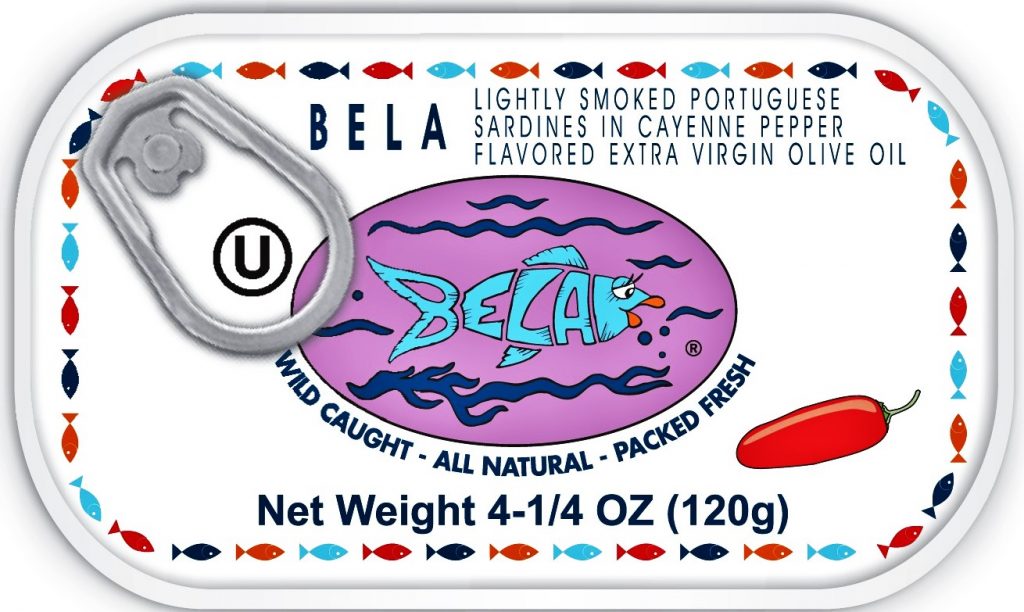
Although Wild Planet also produces good sardines, I prefer the ones from Bela. The company sources its sardines from the Algarve region in Portugal, an area reputed to be fairly pristine (certainly the pictures that I have seen make it appear to be pretty clean!) and the fish has tasted good to me. On average, I eat a can maybe once every couple of months.
Another good tinned seafood company is Cole’s, which also obtains sardines from Portugal (and other fish from throughout the world). I’ve tried a variety of their products and found them to be pretty good. I especially suggest them for those who prefer their sardines skinned and boned rather than whole.
(Note that the usual choice for such sardines – Crown Prince – has repeatedly felt noticeably toxic to me and so I cannot recommend them. Those sardines are sourced from Morocco, which looks pretty clean in pictures but perhaps actually is not.)
A final kind of seafood that I am very fond of is pickled herring, to the point where I likely have eaten more of it in the past few years than all other seafood combined. Pickled herring is a fermented food that I have done really well with when I have been feeling toxic, making me think that probiotic strains that tend to be present in this fish are more helpful to me than those that are typically present in other fermented foods or probiotic supplements.
I’ve yet to find a good mail-order supplier of pickled herring though, and being reliant on the brands chosen by local stores introduces an element of uncertainty into the situation. So I would like some suggestions on that.
One brand of pickled herring that I have never seen in stores is Bubbies. I have really liked Bubbies’ other fermented products and so would really like to try their pickled herring, if I ever could figure out how to get it.
Vital Choice Frozen/Canned Seafood
Tofu & Veggie Burgers
Soy is a food that has been widely vilified among people interested in health issues during the past few years. Some of these people even suggest that fermented soy is theoretically problematic and decline to eat products such as Mary’s Gone Crackers, due solely to the presence of a touch of soy sauce in the recipe.
I tend to think that this is going too far.
Unfermented soy does seem to have some potential to be problematic if eaten in quantity, but whether that means that it never should be consumed at all seems to be up for debate.
A problem with a lot of the research on soy is that it was done using industrial processed soy, which is contaminated with glyphosate and also is not in its natural form.
While unprocessed soy itself does present some theoretical concerns, most of the research that is out there (even the research that has used industrialized soy) suggests that soy is more beneficial than harmful (which could, of course, be due to just to the fact that it often has been compared in studies to industrialized toxic meat, which should not under any circumstances be consumed).
A few disparate opinions about soy (from most negative to most positive) are presented by Dr. Joseph Mercola; Nourishing Traditions authors Sally Fallon & Mary Enig; Dave Asprey; Chris Kresser; Dr. Mark Hyman; and The New York Times Well Blog.
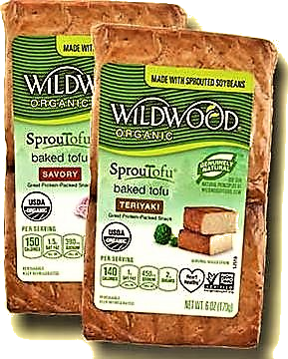
Another question is whether sprouting tofu – as Wildwood does with all its soy products – is a good thing or a bad thing.
As a general rule, especially when there is controversy about a particular food type, I tend to consider how well my body seems to do with it when deciding whether to eat it. I seem to be able to tolerate organic soy just fine, and maybe once or twice a month I feel like eating some tofu in a stir-fry. So that is what I do.
Whether it’s due to the sprouting or to some other factor, I tend to feel especially good about the Wildwood brand and so usually stick with that when I can find it in stores. In addition to raw tofu, they also sell some flavored baked tofu products that I have enjoyed on occasion.
If I can’t get Wildwood, then I usually purchase Woodstock. But other brands of organic tofu (or even tofu marked just as non-GMO) have seemed reasonably okay too.
By far the best veggie burgers that I have had were at the restaurant Farmhouse Cafe & Bakery in Taos, NM. Those burgers are house-made and include a lot of New Mexico pecans, plus sunflower seeds, flax seeds, carrots and parsley. Eventually I learned to make something approaching them by adding plenty of nuts and seeds to Julie Genser’s recipe for Using Juice Pulp to Make Grain-Free Veggie Burgers here on the Living Clean blog. They are super-easy to create if you are making juice anyway, and I recommend that veggie burger fans give them a try.
Wildwood makes what was the top-rated frozen veggie burger that we tried when we were doing taste-testing at Mercey Hot Springs. (It also was one of the only wholly organic veggie burgers that was available at the time and was much higher in protein than most of the other contenders.) The burger is based on tofu and also contains canola oil, onion, carrot, kale, tapioca starch, sea salt and garlic powder (plus a few additional ingredients in the flavor variations).
Very recently, I tried a couple of varieties of the new line of Hilary’s Veggie Burgers. These are organic and free of a variety of common allergens (including soy, gluten, dairy, eggs, corn and nuts). The main ingredients are millet, quinoa and various vegetables. Protein content is low (4 grams compared to 11 grams for the Wildwood). Still, for a variety of other relevant aspects (taste/texture, toxicity issues, ingredient choices), this one seems a much more viable option than pretty much all of the other frozen veggie burgers out there. I do suggest pan-frying them with a good bit of oil though.
Links on this page are in orange (no underlining).