
A Foodie’s Guide To Avoiding Glyphosate (And Other Bad Stuff) – Baking Mixes


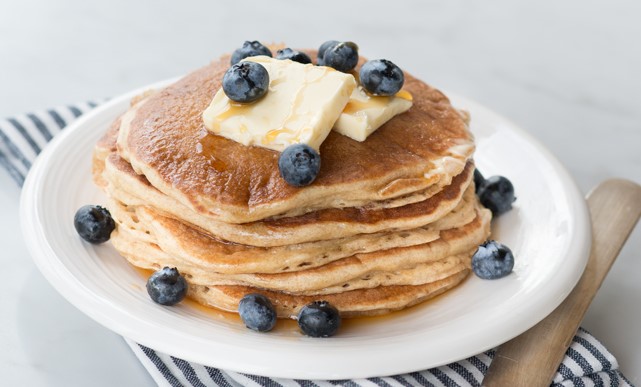
Pancakes made with Jovial Gluten-Free Pastry Flour.
PACKAGED GOODS COMPANIES
Following is a brief summary of some information and personal opinions with regards to some of the more prominent companies currently selling a variety of grain products in the U.S.
Discussions of smaller companies specializing in one type of grain product are included in the individual sections.
Annie’s started in 1989 selling organic macaroni and cheese and then branched out into other organic or otherwise quasi-healthy products, many of them targeted at children but also a popular salad dressing line. In 2014, they were bought by General Mills but continue to insist that “we haven’t compromised on a single thing – not our values, not our culture, and most certainly not our ingredients.” Although I have yet to see the company make any comments about glyphosate at all, I have felt like their white-flour products (including items such as sandwich cookies, boxed mac-and-cheese, snack crackers, and baking mixes) all have felt surprisingly good to me. Note, however, that I have never liked this company’s non-organic gluten-free grain products and was not surprised to see a moderate level of glyphosate contamination revealed in a sample through testing. I also do not have enough experienced with the company’s organic whole grain products to have an opinion about those. Trust Grade: B.
Arrowhead Mills is located in Hereford, Texas (southwest of Amarillo in the Texas panhandle). They sell a wide variety of grains and legumes (mostly organic and almost all grown in the U.S.), along with a few baking mixes and cereals. It is currently owned by the Hain Celestial group, a large natural foods conglomerate. I’ve tried quite a few organic grain products from this company and have had mixed experiences. While some items (including ground corn, amaranth and popcorn) have felt good to me, others (including their oatmeal) have seemed problematic enough that I would be disinclined to repurchase. Trust Grade: C.
Bionaturae is an established organic food company located in Italy but selling a variety of products (including wheat and gluten-free pasta) mostly in the U.S. (The wife of the couple running the company is from the U.S. while the husband is from Italy.) More recently, when the couple’s daughter developed food reactivities, they started offering some additional grain products (including Einkorn wheat flour and pasta, gluten-free rice pasta, and gluten-free bread and pastry flours) through a new “sister company” called Jovial. A number of products from Bionaturae/Jovial are sold on the Healthy Traditions site (meaning that they have tested as negative for glyphosate residue), and I have done well with the many products from them that I have tried. Reports from other mold illness patients have been a little more mixed though. Trust Grade: A.
Bob’s Red Mill is located in Milwaukie, Oregon (a suburb of Portland). It sells a wide variety of “natural” type grain and legume products, some of them labeled as organic. The company was slow to recognize glyphosate as a problem and accepted for its many non-organic products oats that had been sprayed with glyphosate as a pre-harvest desiccant until 2016. In 2018, three out of four organic oatmeal samples from Bob’s Red Mill were found to have low levels of glyphosate contamination. I have tried many organic and non-organic grain products from Bob’s Red Mill over the years (including some very recently) and have yet to find any that felt to me anywhere close to being acceptable. While some of the non-grain products (including almond flour and flax seeds) have seemed more okay, in general I have basically given up on this company. Trust Grade: F.
This is a newer company with the stated goal of providing an easy way for parents to create non-toxic baked goods for their kids to enjoy. (Mostly we are talking healthy kids here, since the products include both wheat flour and standard amounts of sugar.) The baking mixes are certified as glyphosate-free as well as organic, and they do not contain any chemical additives. I have found the products that I have tried to feel quite clean to me, if on the sweet side. What I wish is that they would package the sugar separate from the rest of the mix, so that the amount could be adjusted to taste. I’d be inclined to use the mixes myself reasonably often if they did that, since they are otherwise quite yummy. Trust Grade: A.
Miss Jones is a manufacturer of supposedly organic baking mixes that has achieved a high profile and wide distribution just within the past year or two. I tried one of their cake mixes and had such a bad experience in terms of how it felt to me that I have not purchased anything else from them. Trust Grade: F.
Montana Gluten Free:
Trust Grade: A.
This is a popular line of gluten-free baking mixes and flours, but they do not seem to have demonstrated much interest in the question of glyphosate contamination. I have had some really negative experiences with regard to how their products felt to me, including with items that did not seem to be very high-risk based on the ingredients list. At least for the time being, I have given up on them. Trust Grade: F.
This is a moderately priced organic house brand line sold in Kroger stores and on the Vitacost website. They sell a few grain products, including oatmeal and baking mixes. Although I have not seen them make any statements about how they are sourcing their products and do not mention glyphosate on their website, I have found their products so far to feel pretty good to me. In addition, EWG reported two samples of their oatmeal to be free of glyphosate in its 2018 report. Trust Grade: B.
Trust Rating: A.
Those who are just learning to do Paleo-type baking or who are looking for new recipes may want to check out a few blogs: It Takes Time (by mold survivor Andrea Fabry); Elana’s Pantry (by best-selling author Elana Amsterdam); Against All Grain (by autoimmune sufferer Danielle Walker); and Food Babe (by healthy food advocate Vani Hari).
Mold-oriented physicians Jill Carnahan and Amy Myers also have some good recipes on their blogs.
I suggest starting with these Cinnamon Sugar Cookies from Dr. Carnahan’s blog, except to cut the amount of maple syrup used to about one-third of the amount suggested in the recipe.
Paleo Baking Recipes:
Wheat Baking Recipes:
GLUTEN-FREE FLOURS
I had never much focused on gluten-free baking until very recently, when I decided to try to find some good gluten-free flour blends – as well as some gluten-free pancake mixes – to mention in this article series.
This turned out to be a surprisingly difficult enterprise, since most of the products that I tried – including the organic ones- turned out to feel incredibly toxic to me.
An additional problem that I had was that although my blood sugar is generally pretty stable these days, many of these products pushed me into having more hypoglycemic-type feelings than I had had in years.
This seems particularly peculiar since items that I would have thought would be worse for my blood sugar – like organic wheat cookies with a high sugar content – did not seem nearly as bad for it as most of the gluten-free pancake mixes that I encountered.
Eventually I concluded that my negative reactions to these products likely are related to a combination of at least three factors – heavy metal contamination of the rice flour; pesticide contamination of the cassava/tapioca flour; and the addition of high amounts of starch.
Undoubtedly, my reactions to these kinds of issues were worse than what many people would experience as a result of eating these products. Still, since I think that everyone would do well to stay away from these kinds of exposures, I am omitting all the products that gave me that kind of reaction from this list.
Unfortunately, that eliminates almost all of the dozens of products that I tried. There are just a few possibilities left that I would eat myself under any circumstances and that I would therefore feel comfortable recommending to others.
In most cases, by the way, it seems there is not a lot of difference between products classified as “gluten-free flours” vs. “gluten-free baking mixes” vs.”gluten-free pancake mixes.”
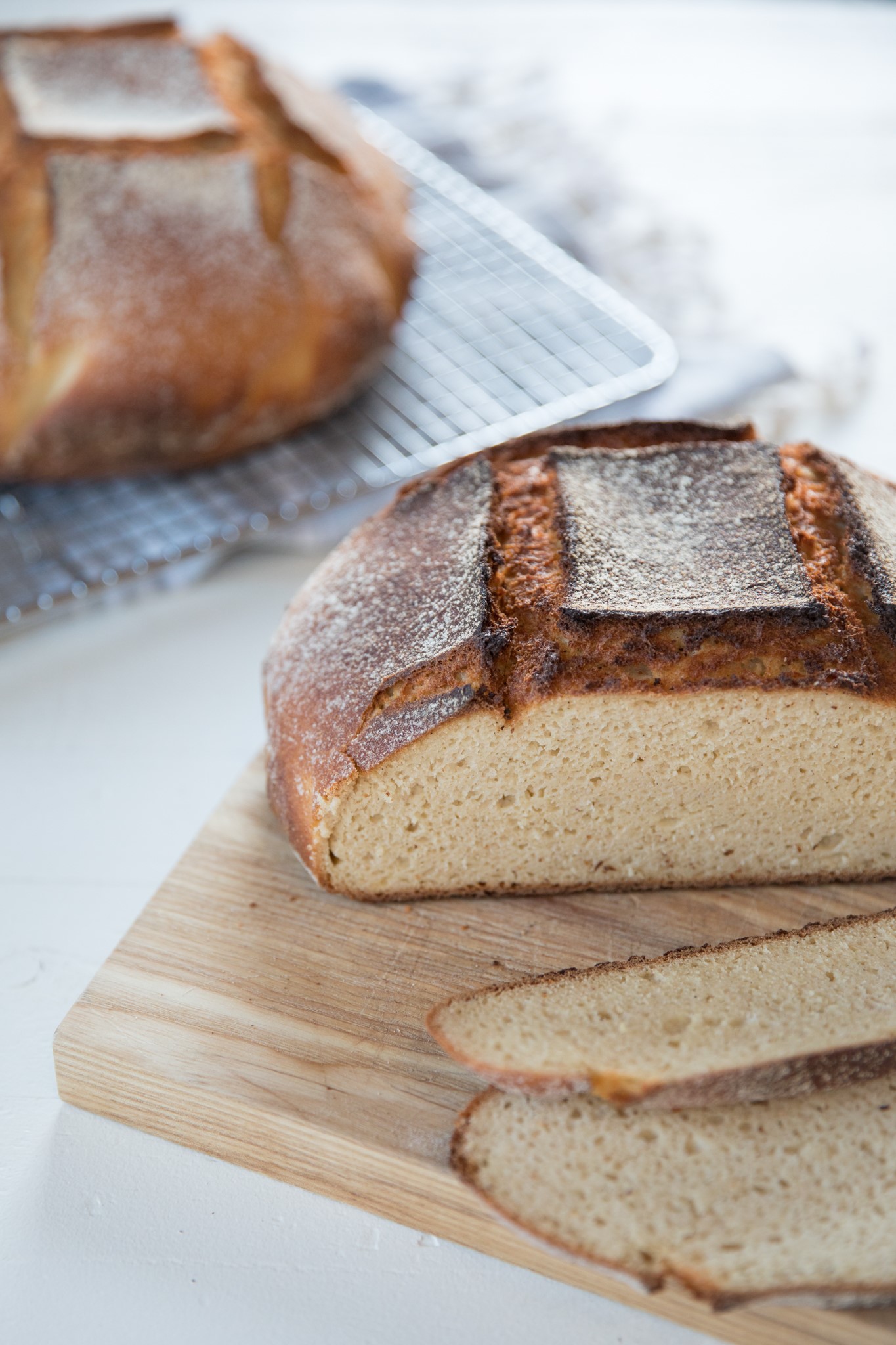
Jovial Gluten-Free Kefir Sourdough Bread.
The main distinguishing factor seems to be whether the products contain baking soda or baking powder (and also in some cases whether they have sugar added).
While the presence of leavening agents is generally fine for the kinds of gluten-free baking that I have done so far (such as muffins, cakes, quick breads, cookies and pancakes), it would be less appropriate for baking yeast bread.
I therefore am putting flour mixtures that include baking powder/soda into their own section (“Pancake & Cornbread Mixes”), even though in most cases they could be used as the basis for many other baked goods as well.
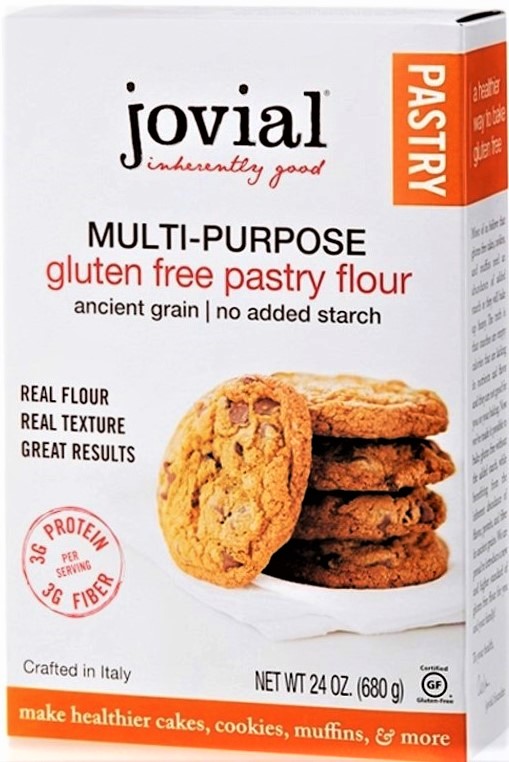
When it comes to plain “Gluten-Free Flour Blends” (that is, ones without added sugar or leavening agents), one that I especially like is from Jovial Foods.
Jovial’s flours are made of a mix of ingredients grown almost entirely in Europe – sorghum, brown top millet, corn and rice from Italy; yellow millet from Italy or Poland; teff from Spain; xanthan gum from Austria; and tara gum from Peru.
Although only the corn and rice are organic, it is not a surprise to me that this product would feel good to me since European grains are generally pretty clean.
Of all the ingredients listed here, only the millet from Poland seems concerning to me since the Canadian study suggested that some products from Poland had substantial amounts of glyphosate contamination.
I did not get any sort of feeling in trying this product that there was any sort of glyphosate problem with it though. It’s my impression that Jovial is a company that is particularly concerned about pesticide issues and so perhaps they have put some research into this topic.
With regard to the xanthan gum, the Jovial website states:
We were very happy to find a Swiss company that manufacturers xanthan gum in their facility in Austria. The gum is manufactured by fermenting the carbohydrates contained in beet or cane sugar, or glucose syrup derived from corn. All ingredients are certified GMO free.
The Jovial gluten-free flour line includes four different flours- two for making bread and two for making pastries. Whole-grain and refined-grain versions are available in each.
The pastry flours do not include added starch, and I think that this contributed to why I felt good about them. (I have yet to use the bread flours but now would be interested in baking some gluten-free bread just to give them a try.)
The information about the pastry flours on the company website reads:
Did you know that most gluten free flours contain up to 40% added starch, even though gluten free grains have as much starch as wheat? We challenged the notion that added starch is needed in gluten free flours and created our multi-purpose pastry flour with an abundance of protein and fiber rich ancient grains. Organic rice and corn flour balance the colors of the mix so your baked goods will look and taste delicious. Yes, you can bake light and delicious cakes and muffins and create fluffy pancakes without added starch and you’re going to love how real the textures and flavors are!
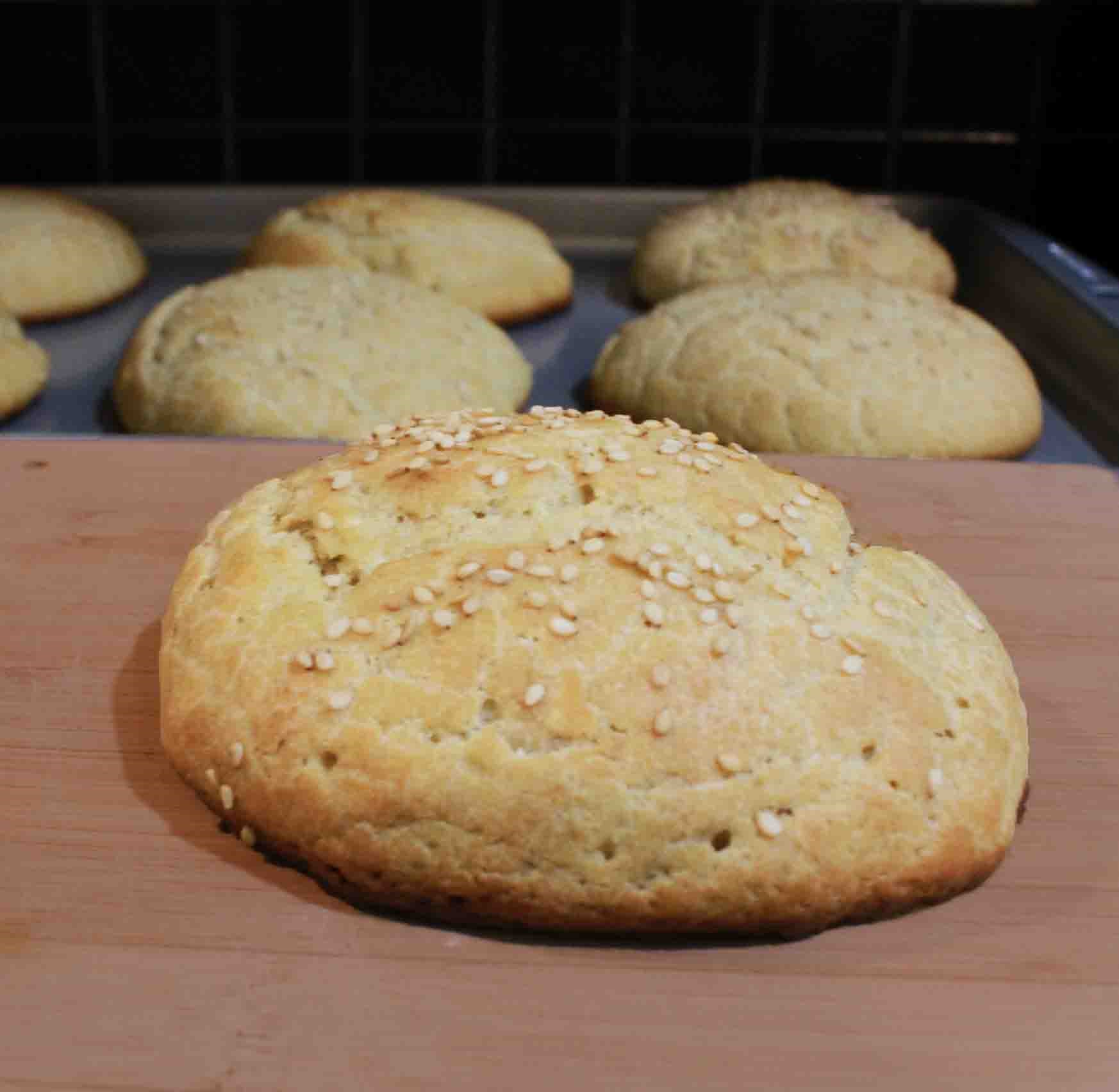
Montana Gluten Free hamburger buns.
Another gluten-free flour mix without baking soda/powder that I really like is the oat-based mix from Montana Gluten Free.
It contains just toasted oat flour, tapioca flour, salt and xanthan gum, but can be used cup-for-cup to replace wheat flour in recipes.
As noted above in the section on “Oats” above, Montana Gluten Free has every batch of their oats tested for glyphosate and GMO contamination as well as gluten contamination.
Although I have not yet found out how Montana Gluten Free is sourcing their tapioca or xanthan gum, their baking mix felt really good to me and I would consider using it again in the future.
A large number of recipes using the baking mix as well as other products sold by Montana Gluten Free are listed on the company’s website.
Another oat-based gluten-free flour that I think likely is very good is the organic bread flour offered by Sweet Elizabeth’s Organics.
It contains glyphosate-tested oats from GF Harvest; sweet sorghum flour; psyllium husk; coconut flour; and salt.
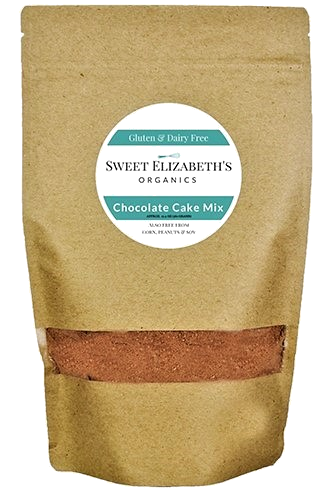
Although I have not purchased this yet, the chocolate cake mix from this company that I did try was of such high quality that I feel confident that their bread flour is likely to be very good too.
The bread flour is on the expensive side though ($11 for a little less than a pound).
Although I tried dozens of gluten-free flours and pancake mixes with rice flour as the main ingredient, there was only one that I felt good about.
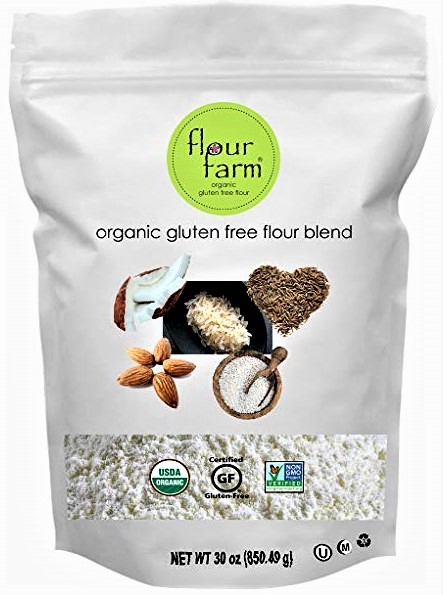 It is a new product from a company called Flour Farm, which is based in Spokane, Washington.
The flour mixture is 100% organic and uses just five ingredients – sweet white rice and brown rice from northern California; almonds from Sicily; coconuts from the Philippines; and tapioca from Thailand.
Those are some places that I would inclined to buy those ingredients if I were making my own gluten-free flour mix using them, and so it seems that the chefs who run this company put a lot of thought into sourcing question themselves.
The Flour Farm product also gets very good Amazon reviews.
Considering how little baking I do, I’m still not sure how often I actually will use this product in the future.
For those who are looking for a good, solid, non-toxic, gluten-free white flour replacement though, Flour Farm is the hands-down winner in my mind.
Recommended Gluten-Free Flour Blends:
Flour Farm Gluten-Free Flour Blend
Montana Gluten Free All Purpose Baking Mix
Sweet Elizabeth’s Bread Flour Mix
PALEO FLOURS
Although I tried a number of different “Paleo” flours, most of them seemed just as unacceptable to me in terms of toxicity issues as the grain-based flours.
I did really like every single product that I tried from Simple Mills though, including their baking mixes.
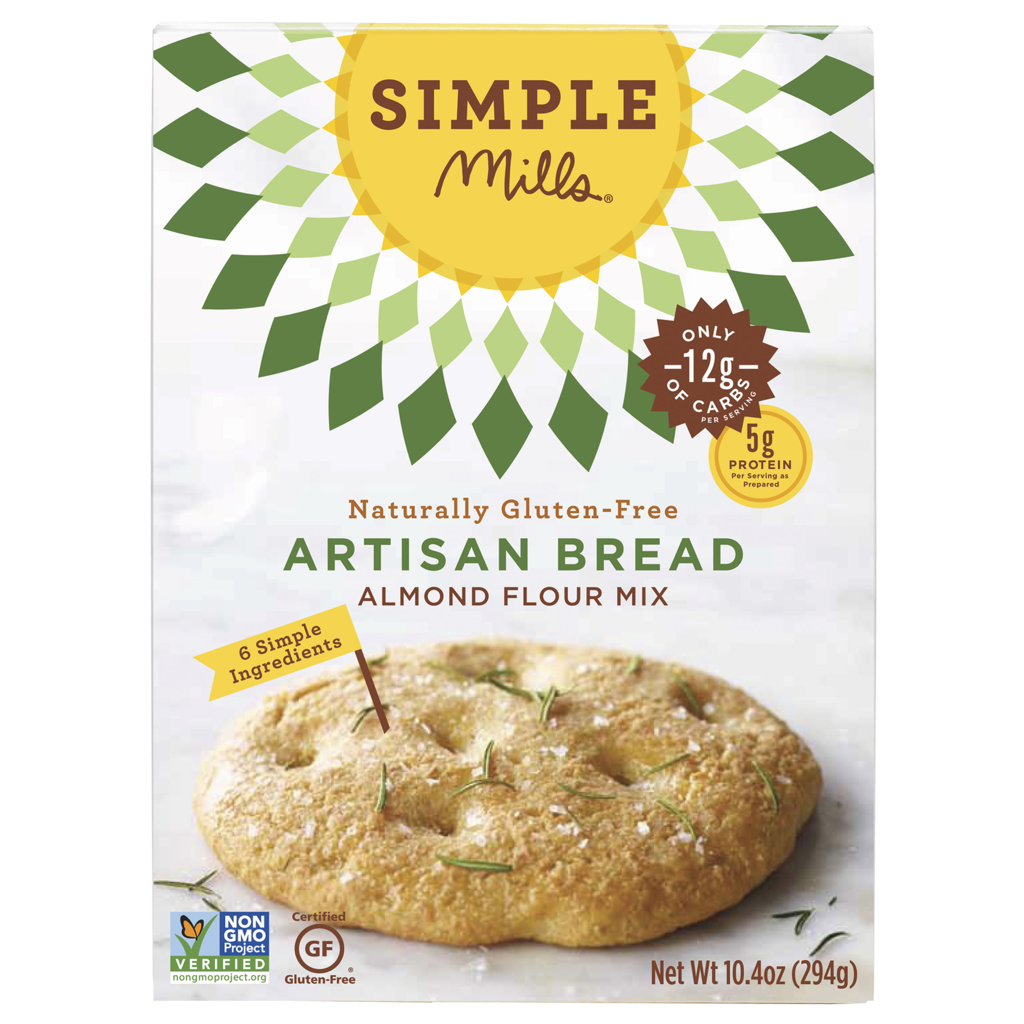
Although Simple Mills does not have a product that is labeled as a general-purpose flour, their Artisan Bread Mix seems appropriate to serve that purpose.
The bread mix contains just almond flour, arrowroot, flax meal, tapioca, sea salt and baking soda.
Simple Mills informed me that their cassava/tapioca products are sourced from southeast Asia and that “our ingredient specialists work really hard to make sure all our products are responsibly sourced.” perhaps this explains why I feel better about this company’s products than most others that contain cassava or tapioca.
I’ve made bread according to the instructions from this mix several times and it always has turned out well. Perhaps I should try branching out to use it for other baked goods, therefore.
Although the mix is rather expensive at the regular price ($9 for 10 ounces), I have picked the product up for as little as $5.50 on Vitacost by waiting for one of their 20% off site-wide sales.
Simple Mills also makes a very good Almond Flour Pizza Dough Mix containing just almond flour, arrowroot, flax meal, cauliflower, baking soda, oregano, cream of tartar and garlic.
I have really enjoyed using that for pizza crust and think that it might have potential for other savory baked goods as well.
Another idea is to purchase several different grain-free flours and then to mix them together to have on hand as a Paleo flour for general baking uses.
However, the most frequently suggested basic mix of flours – the Dr. Axe Paleo Flour Recipe – includes almond flour, coconut flour, cassava and arrowroot. That would require finding cassava and arrowroot flours that I felt good about using, and so far I have not accomplished that.
Another possibility might be something like the Dr. William Davis Wheat Belly Recipe, which contains almond flour, coconut flour, flaxseeds, baking soda and (optional) psyllium.
Recommended Paleo Bread Mixes:
Simple Mills Artisan Bread Mix (1)
Simple Mills Pizza Crust Mix (1)
Paleo Flour Recipes:
Dr. William Davis Wheat Belly Flour Blend
PANCAKES
It is not, of course, really necessary to buy a pancake mix in a box in order to make pancakes.
This can generally be accomplished merely by adding a teaspoon of baking soda or baking powder (and maybe a little bit of sugar) to any sort of flour mixture and then proceeding in the same way as one would if using a box mix.
However, pancake mixes are incredibly popular, and so I decided that I would try to see if I could find some alternatives in the category that felt good to me.
Unfortunately, after sampling many products of various kinds from different companies, I came up with only a few that I found to be even acceptable.
Undoubtedly my favorite pancake mix is the one from Simple Mills.
Unlike most pancake mixes, it does not contain any cassava or tapioca flour (an ingredient that usually feels toxic to me, apparently as a result of being grown in Brazil or other countries where especially toxic agricultural chemicals are used) or ingredients at a high risk of being contaminated with either heavy metals or glyphosate.
The product contains just almond flour, arrowroot, organic coconut sugar, organic coconut flour, cream of tartar, baking soda and sea salt.
Especially in comparison to almost all of the other pancake mixes that I tried, the Simple Mills pancake mix feels almost like eating actual food – that is, that I could eat one or two of these instead of my usual bowl of oatmeal and then go on to have a pleasant and productive day.
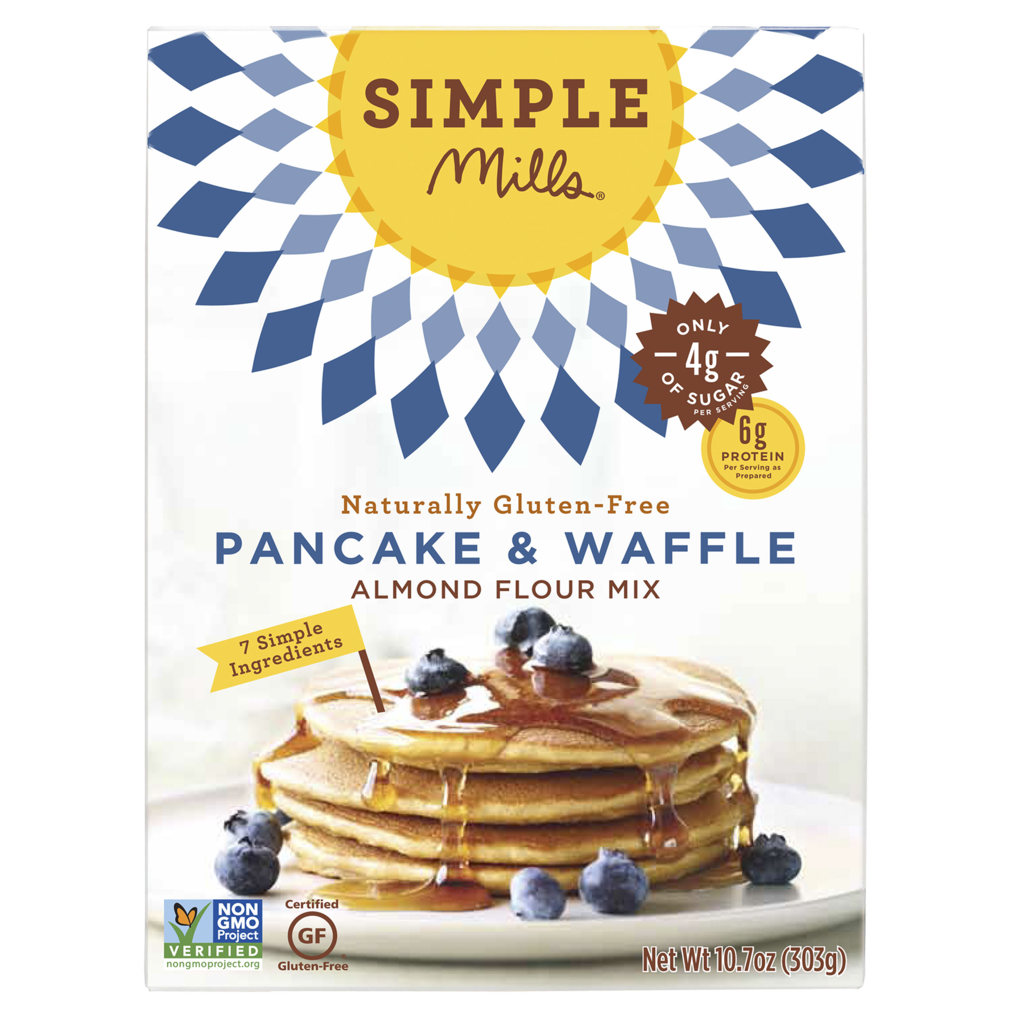 The Bob’s Red Mill Paleo Pancake & Waffle Mix contains exactly the same ingredients as the Simple Mills pancake mix.
While this mix did not feel nearly as good to me as the Simple Mills version, it at least felt better than the many Bob’s Red Mill grain products that I have tried and rejected as being unacceptable. I might consider it if I really wanted to make pancakes from a mix and no other choices were available to me, I guess.
Sweet Elizabeth’s Organics makes a pancake mix containing only GF Harvest organic oats (certified as both gluten-free and glyphosate-free), coconut flour, baking soda and salt.
The instructions suggest adding four eggs, a little apple cider vinegar, some vanilla extract, and some coconut oil or other fat.
As with all of Sweet Elizabeth’s mixes, the price ($11 for about 14 ounces) seems a little high at first. Based on the quality of the company’s chocolate cake though, I imagine these pancakes are very good, and I probably will spring for this mix eventually.
Of the many other gluten-free grain-containing pancake mixes that I tried, only Simple Truth All-Purpose Baking Mix came even close to being acceptable.
The mix is stated as organic and contains white rice flour, corn starch,corn flour, tapioca starch, cane sugar, cream of tartar, sea salt, guar gum, locust bean gum, and baking soda.
I am not recommending this product terribly enthusiastically and doubt that I ever will purchase it again myself. It’s much better than all the other mixes with similar ingredients that I have tried, however.
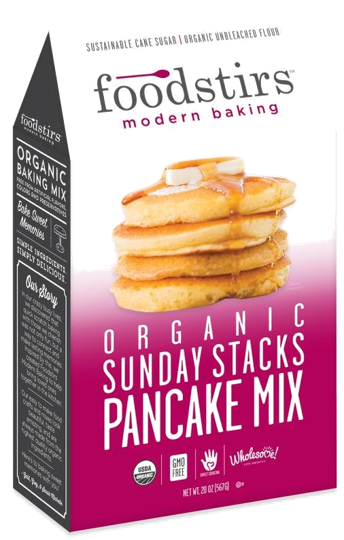
For traditional-style pancakes made with wheat flour, my top choice of the mixes I have tried is Foodstirs Sunday Stacks Pancake Mix.
This is an organic product that is regularly tested to make sure that it is free of glyphosate residues as well as GMO’s, and I found the resulting pancakes to be clean-tasting and enjoyable.
The ingredients are “identity preserved wheat flour,” cane sugar, whey, corn flour, baking powder, brown sugar, vanilla extract, sea salt, sunflower oil and cinnamon.
Another traditional wheat-flour pancake mix that seems to me likely to be a good bet is the Annie’s Organic Pancake & Waffle Mix.
Although I have not yet tried this particular product, I have used a few other baking mixes from Annie’s and sampled many other Annie’s products made with organic white flour. I have felt fine about all of these, and so I suspect that the pancake mix also would feel fine.
The Annie’s pancake mix has a simple list of all-organic ingredients (wheat flour, cane sugar, sunflower oil, baking powder and sea salt). It’s a little less sweet than the Foodstirs mix.
One more wheat-based possibility is the Madhava Pancake Mix, which contains some ancient grains as well as regular wheat. My main concern here is that unlike the Madhava yellow cake (which I have tried and really liked), the pancake mix includes carrageenan (a seaweed-based thickener) and many people report not doing very well with that.
Recommended Grain-Free Mixes:
Bob’s Red Mill Paleo Pancake & Waffle Mix (1)
Simple Mills Pancake & Waffle Mix (1)
Recommended Gluten-Free Mixes:
Simple Truth All-Purpose Baking Mix
Sweet Elizabeth’s Pancake & Waffle Mix
Recommended Wheat-Containing Mixes:
Annie’s Pancake & Waffle Mix (2)
Foodstirs Sunday Stacks Pancake Mix (2)
CORNBREAD
After trying out several different cornbread mixes and not being entirely happy with any of them, it is seeming to me that maybe making cornbread from scratch (which is not very hard to do) is the most sensible thing to do in most cases.
However, especially on certain occasions such as camping, it can be much more convenient to make cornbread from a mix than to bring along many different ingredients. Here are a couple of possibilities for this purpose.
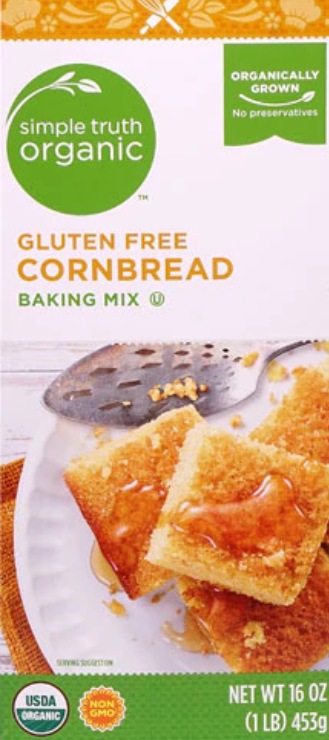
As gluten-free baking mixes go, the Simple Truth Organic Gluten-Free Corn Bread Baking Mix was not too bad. The ingredients are cornmeal, cane sugar, white rice flour, potato starch, corn flour, corn starch, sea salt, cream of tartar, baking soda, guar gum and locust bean gum.
The main potential problem that I think that some people may have with this product is that it contains 9 g of sugar per serving.
I also thought that this cornbread turned out to be a little on the dry side when prepared according to the package directions. If I made it again, I likely would use at least one extra egg and some extra butter (additions that might help to cut the sweetness a bit as well as to add some moistness).
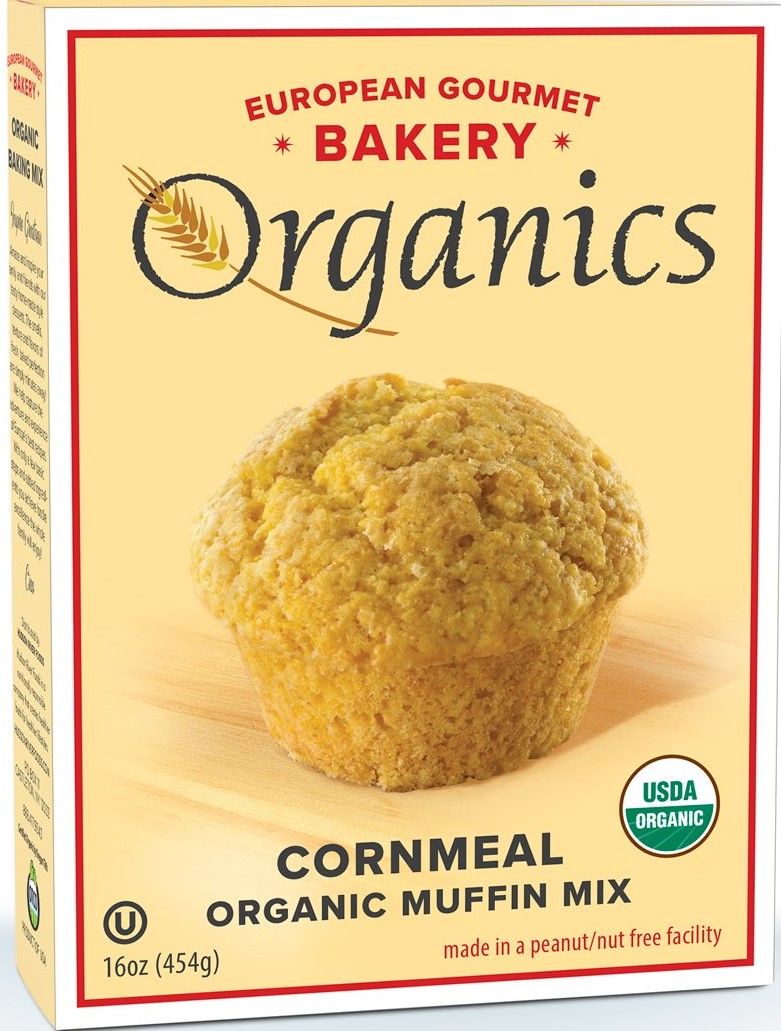 European Gourmet Bakery (which is based in New York and has nothing in particular to do with Europe) makes a corn muffin mix that I thought was absolutely delicious and quite clean tasting.
I was surprised to find that it contains 13 grams of sugar per muffin, since it didn’t actually taste all that sweet to me. It’s also contains wheat flour and is on the pricey side compared to many other baking mixes.
If I put aside concerns about price, sugar and gluten, these corn muffins definitely would be my first choice though.
The Arrowhead Mills Cornbread & Muffin Mix is a wheat-containing but unsweetened cornbread with all-organic ingredients except for the buttermilk solids and inulin.
In general, inulin is an ingredient that seems to me somewhat suspect since it is a processed food-based substance rather than an actual food. Apparently it is often but not always derived from chicory, but in any case I do not have any idea how to guess what kind of toxicity might be present in it.
On the other hand, Arrowhead Mills seems to be pretty trustworthy with regard to its corn products and the muffins I made from this mix seemed reasonably clean to me.
Recommended Gluten-Free Cornbread Mixes:
Recommended Wheat-Containing Cornbread Mixes:
Arrowhead Mills Cornbread & Muffin Mix (1, 2)
European Gourmet Bakery Cornmeal Muffin Mix (2)
CAKES, COOKIES & MUFFINS (GLUTEN-FREE)
Many people like to indulge in sweet foods on birthdays or other special occasions, and I personally don’t think that there is anything especially wrong with that if their bodies are not damaged in specific ways that make them unable to process the sugar without particular harm.
That seems to me consistent with how people have been eating for many centuries and therefore something that we seem to be at least somewhat evolved and/or designed to be able to tolerate.
However, it does not seem to make any more sense to me to be consuming toxic chemicals on special occasions (and sharing those toxic chemicals with our loved ones) than it does to be consuming them the rest of the time.
For the most part, though, if people want to be eating non-toxic cakes or other baked goods, then probably they are going to have to be doing the preparation themselves since bakeries that are concerned about toxicity issues tend to be few and far between.
While creating clean and tasty baked goods such as cakes and cookies from scratch is not actually all that hard, many people do not have much experience with this and are disinclined to put a lot of effort into learning a whole new skill set just so that they can make an occasional birthday cake.
For them, especially, cake mixes (or cookie mixes or muffin mixes) may make a lot of sense. And although there are an awfully lot of really toxic baking mixes out there, it turns out that there also are a few that I have found to be quite clean.
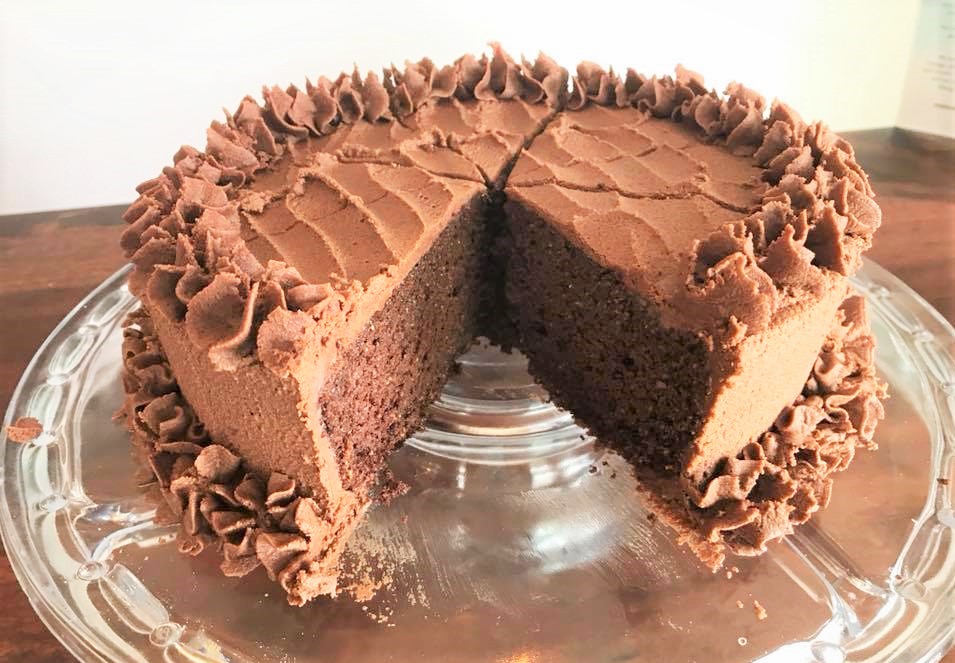
A Sweet Elizabeth’s Organics chocolate cake.
For instance, recently I was totally blown away by the quality of the Sweet Elizabeth’s Organics chocolate cake and now would like to try other products from the company’s line.
The Sweet Elizabeth’s baking mixes all have as their basis ground oats from GF Harvest (which are tested for glyphosate contamination and which I have found to feel good to me).
Although I have read elsewhere that it is tricky to bake with oat flour unless a binder like xanthan gum is used, the Sweet Elizabeth’s chocolate cake includes only coconut sugar, oat flour, coconut flour, cocoa powder, baking soda and salt (all organic). The ingredients are complemented with four eggs and a can of coconut milk.
This turned out to be basically the best chocolate cake I have ever had from a variety of respects.
Discovering it was a “where have you been all my life?” moment for me, because it checked all the boxes for me (very clean, not too sweet, substantive, moist, complex flavors, remained appealing after several days in the refrigerator, very easy to make, appropriate to serve to almost everyone provided they like coconut and chocolate) in a way that none of the many, many other cake mixes that I had previously sampled and rejected ever had.
The downside is that this is also the most expensive cake mix that I have encountered – $15 for a mix to make one 9×13″ cake.
Undoubtedly, it would be possible to make this cake for considerably less by purchasing the ingredients separately, and I imagine there is a recipe online somewhere.
However, this product was so easy to throw together and yielded such good results that unless I was planning to make a cake like this fairly often (which admittedly would be tempting), I’m not sure that it would be worth it to try to figure out how to duplicate it.
Other mixes in the Sweet Elizabeth’s line – all with similar ingredients – include vanilla cake, coffee cake, fudgy brownies, pancakes, muffins and bread. A few of them are available via Amazon Prime.
Sweet Elizabeth’s also has a cafe selling meals, baked goods and the mixes in Colorado Springs, Colorado. I would really like to pay them a visit.
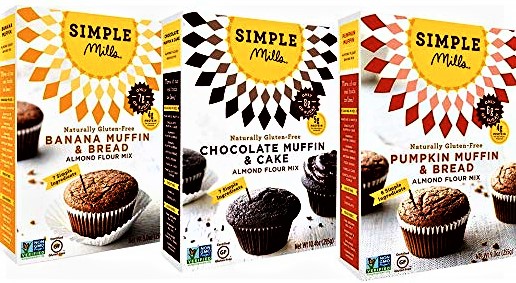
Simple Mills grain-free muffin mixes.
In addition, I also am very enthusiastic about the grain-free baking mixes from Simple Mills.
The Simple Mills baking mix line includes brownies; chocolate-chip cookies; vanilla cake; chocolate cake/muffins; pumpkin muffins; banana-nut muffins; pancakes/waffles; pizza dough; and artisan bread.
The ingredients in all of these are indeed very simple, based around almond flour, coconut flour, arrowroot, coconut sugar, tapioca (in some cases), baking powder and salt.
In addition, the sweet baked goods are only moderately sweet, and the lack of grains makes them feel less like dessert and more like food to me.
Although not all the ingredients are organic, I’ve felt pretty good about all the products (including the packaged prepared cookies and crackers) from this company that I have tried so far.
Finally, I think there is likely a demand for a gluten-free cake and nut-free mix that is reasonably non-toxic but also reasonably priced, to be used for special occasions such as birthdays.
For that purpose, I might consider the Simple Truth Organic Gluten Free Chocolate Cake.
This cake is way too sweet for my taste, and I wouldn’t say that it’s clean enough that I would want to include it in my diet on a regular basis even if the sugar were not an issue.
However, it tastes pretty good and likely would fool even most skeptics into thinking that it is a a “regular” cake rather than a gluten-free one. And it is non-toxic enough that even I would be willing to eat a slice.
The only thing that I might suggest is that if the goal is to have nice tall frosted birthday cake, it might be best to buy two boxes since the layers bake up really thin with just one box.
The flours include potato starch, rice, corn and tapioca. At present the only flavor is chocolate.
Recommended Grain-Free Mixes:
Recommended Gluten-Free Mixes:
CAKES, COOKIES & MUFFINS (WHEAT)
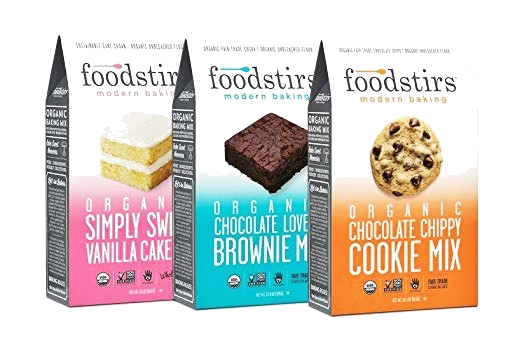
For those who are looking for an easy way to bake less-toxic versions of a wide variety of conventional cakes and cookies, Foodstirs Modern Baking would be my go-to brand.
The line is specifically designed to appeal to moms who are looking for non-toxic version of the sweet foods that their kids want to eat or may insist upon eating. The products are certified as glyphosate-free as well as Non-GMO Project Verified and USDA organic; the wheat is described as “identity preserved”; and the cane sugar is biodynamc.
I’ve tried a few products from this company, and I agree that they are appealing in a variety of ways. They do feel clean to me; the ingredient lists are simple and consist only of actual food ingredients rather than the suspect items often included even baking mixes labeled as organic; they are easy to make; and they are quite tasty. They also are not too expensive and, I think, likely would have a great deal of appeal to kids and their mothers.
Personally, I just find these products way too sweet for my taste. Although I do understand that I am not really the target market for these products, I also question whether it’s a great idea for any kids to be eating desserts that are this sweet on a more than very occasional basis either.
What I think would be a better idea is if the sugar were included in a separate packet in the mix, so that moms could adjust the amount of sugar to taste. That would be better from a PR point of view than having the product necessarily be full of “toxic” sugar and very well might persuade some people (like me) to consider making the product much more often than they otherwise would at present with the high sugar content.
In general, Foodstirs (which has involvement by the U.S. actress Sarah Michelle Gellar) seems a company that is a little odd to me in other ways too. For instance, the whole company seems to be based on avoidance of environmental toxicity, but then they also have an entire line of products – “Mug Cake Mixes” – that can be prepared only using a microwave. In addition, while they make a special point of insisting that they are sourcing their flour from “identity preserved” farmers, they refused to reveal to me any information whatsoever about even what countries those farmers might be located.
Still, I will say that the products do feel clean to me, and that I appreciate their being leaders in committing to the glyphosate-free certification. That means a lot.
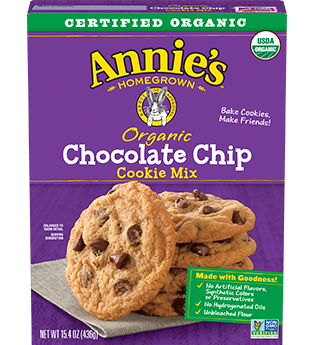 Although the baking mixes from Annie’s Homegrown also are too sweet for my taste, I have felt pretty good about them in terms of toxicity issues as well.
Similar to the Foodstirs line, Annie’s offers organic baking mixes made with white wheat flour and other simple ingredients, apparently designed primarily to appeal to kids and their moms. Several different kinds of cookies and cakes (plus a pancake mix) are included.
Especially considering that Annie’s is now owned by General Mills, it surprises me a bit that their ingredients would feel much more acceptably clean to me than have those of some of their direct competitors that would seem to be following the same standards.
Upon reflection, though, I actually have tried quite a few white-flour products from Annie’s over the years (including such things as mac-and-cheese, sandwich cookies and cheese crackers) and recall doing fine with all those products from a toxicity standpoint. The only explanation that I can come up with is that the company uses so much white flour that it is contracting specifically with wheat farmers and then exerting some control over their growing processes to ensure that contamination of the product that would be in violation of organic standards does not occur.
According to the Annie’s website:
Of course we use lots of wheat – enough acres to cover the entire city of San Francisco and then some!
We’re part of the U.S. Organic Grain Collaboration working to increase the supply of organic grain in the U.S. Through collaboration and engagement with other companies, we’re working on a series of activities to promote increased organic grain production in the U.S., including supply chain analysis to identify challenges and opportunities, policy advocacy to promote organic farming, and direct engagement and grower outreach in pilot regions throughout the U.S.
We partner with a progressive sugarcane supplier in Brazil, who demonstrates an intensive focus on agroecology and a commitment to building soil health, enhancing biodiversity and regenerating the land. Our supplier also invests in its workers by being certified against the Fair Trade Program IBD standard.
Considering my concerns about the vast number of super-toxic pesticides said to be in use in Brazil, the idea that sugarcane is often sourced from that country is rather worrisome. On the other hand, I do not recall ever getting a sense that any kind of cane sugar (even non-organic) felt noticeably toxic to me, and so maybe there is something about cane sugar production that I do not understand that makes toxicity more of an issue with it.
Madhava is an organic sweetener company that also makes a few baking mixes that include some ancient grains (spelt and Kamut wheat) as well as regular wheat. I tried the yellow cake mix and thought that it was very nice, and they also offer a brownie mix.
Although I have yet to actually make a cake from a mix from European Gourmet Bakery, I was impressed enough with the company’s corn muffin mix that I feel fairly confident that their dessert baking mixes (which use similar ingredients) also are good.
Recommended Wheat-Based Mixes:
CAKE FROSTINGS
Although boxed cakes are usually more than sweet enough for my taste to begin with and thus do not need any additional added sugar, frosting can be helpful to make a special-occasion cake more festive.
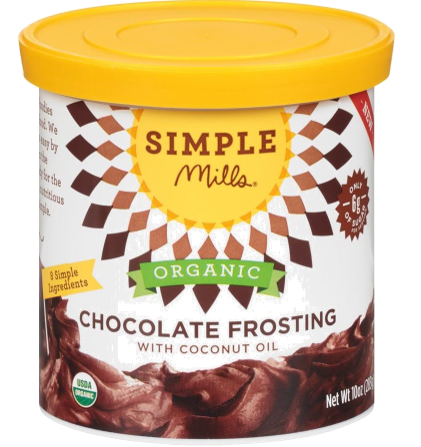
For this, I really like the ready-made, certified organic Simple Mills frostings.
The chocolate frosting contains just palm shortening, powdered sugar, cocoa powder, coconut oil, vanilla extract, rosemary extract (for freshness), sea salt and monk fruit extract.The vanilla frosting substitutes tapioca for the cocoa powder.
Although I have not had other good experiences with monk fruit, I did not even realize that this was a reduced-sugar product (with 8 grams of sugar per portion) until long after I started using it. There must be something about monk fruit that I do not understand, if some versions seem so much more okay to me than others.
The main problem with the Simple Mills frosting mixes is that they need to be at a pretty narrow temperature window (somewhere in the mid 70’s) in order to spread nicely on a cake.
If they are too cold, they will harden up and not be spreadable, but if they get too hot, then they will melt and may never be usable again.
While it sometimes is suggested that the frostings be kept cold and then heated very briefly (just for a few second) in a microwave oven, I am unwilling to use a microwave for any purpose and therefore do not own one.
Nonetheless, I have been able to use these frostings without problems by adjusting my house temperature temporarily to about 75 degrees before trying to spread them.
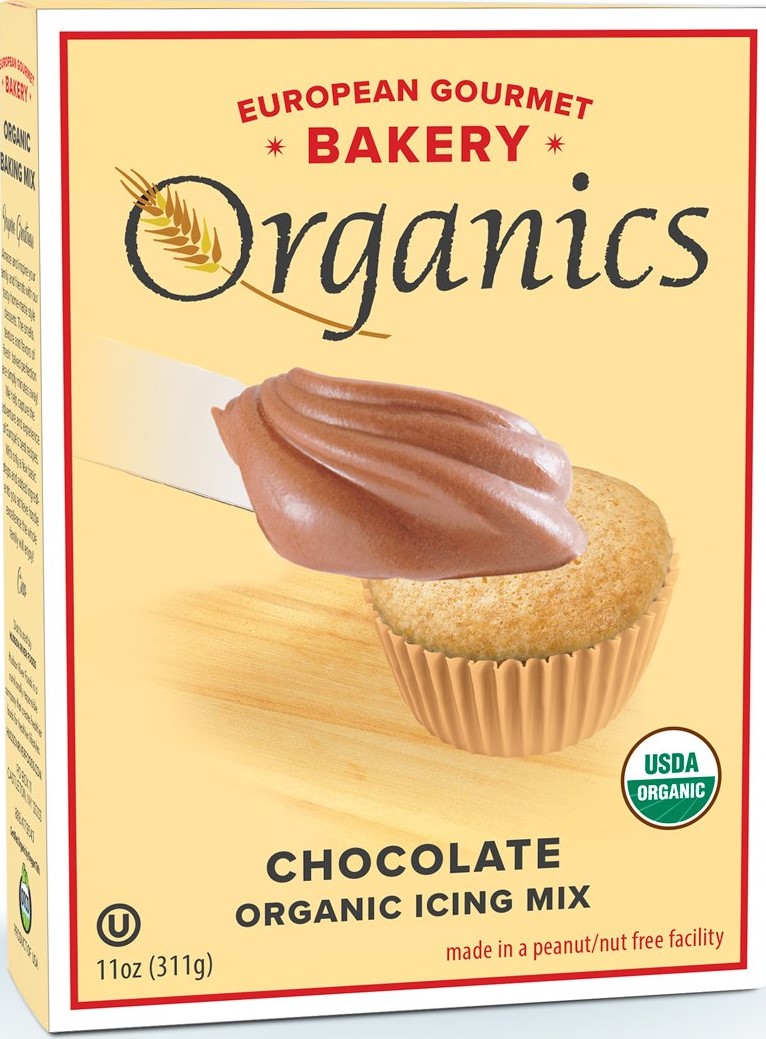
Another more traditional but sweeter possibility is a simple buttercream consisting of just butter, powdered sugar, and either cocoa powder or vanilla flavoring.
While buttercream icing is not difficult to make from scratch, mixes consisting of just the dry ingredients to be whipped with butter also seem to be pretty popular.
One such product line, for example, includes the organic chocolate and vanilla organic icing mixes from European Gourmet Bakery.
(Note, however, that despite the misleading name, this is a U.S. company and that ingredients seem to all be sourced from the U.S. rather than Europe.)
Simple recipes for a number of additional yummy-sounding and easy frostings (including some dairy-free frostings) are listed on the Sweet Elizabeth’s Organics website.
Elana’s Pantry also has some frosting recipes that could be worth considering.
Recommended Ready-Made Frostings:
Recommended Frosting Mixes:
Frosting Recipes:
PUDDINGS
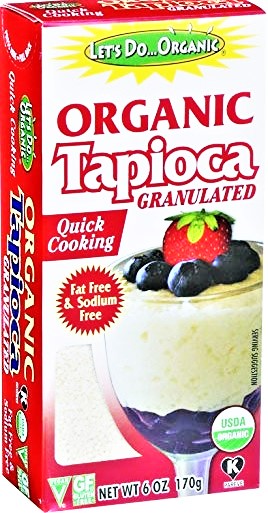
I’ve been a fan of tapioca pudding ever since I was a little girl in the 1960’s, and have been using the Let’s Do Organic brand of tapioca granules from Edward & Sons successfully for a number of years.
Usually I use the old-fashioned recipe for Fluffy Tapioca Cream from the Minute Tapioca box (cutting down the sugar a little since I do not like things too sweet these days).
For those who are trying to avoid milk, eggs or sugar, though, the recipe on the Let’s Do Organic box – which replaces all of these ingredients with canned coconut milk – is an at least somewhat acceptable option though.
I tried making the chocolate pudding from European Gourmet Bakery and that that the quality was quite good (even though, of course, it was much sweeter than would be my preference).
Probably the vanilla pudding from this company also would be good. I wonder about the other pudding flavors (banana and butterscotch) since it is rare for me that even organic foods with flavoring agents turn out to be edible for me.
Recommended Puddings:
European Gourmet Bakery Puddings

About The Author
Lisa Petrison is the executive director of Paradigm Change, a website and blog focusing on the role of environmental microbial toxins (including mold toxins) in chronic illnesses.
Living Clean in a Dirty World is an associated blog site focused on the topic of recovering from chronic mold-related illness using a variety of approaches.
These websites have received more than a million page views by more than 400,000 visitors since their inception in 2013.
Lisa also is the author or editor of several books on the topic of recovering from mold-related illness. These include A Beginner’s Guide to Mold Avoidance (co-authored with Erik Johnson), Back From the Edge and Erik on Avoidance.
She runs the Mold Avoiders recovery help group on Facebook (with more than 12,000 members) as well as the associated Mold Avoiders website.
Lisa previously worked as a reporter, a marketing consultant and a business school professor. She holds a Ph.D. in marketing and psychology from the Kellogg School of Management at Northwestern University, as well as B.S. and M.S. degrees from the Medill School of Journalism at Northwestern University.
Please sign up for email updates on new information from Paradigm Change (including future articles in this series on avoiding glyphosate).
Also please feel free to share your experiences with various food products or suggestions of items that you would like to see included in this blog series in the comments section below.
Links on this page are in orange (no underlining).
Thank you for reading this blog.