
The Living Clean Guide to Avoiding Glyphosate and Other Bad Stuff in Food (Part 9) – Beverages


Arize Kombucha.

Kombucha
A product that I especially like is GT’s Kombucha. If I could afford it, I likely would drink nothing but that, all day every day, and believe my health would be better for it. (As it is, I usually drink at least a bottle per day, which is still a pretty big investment.)
I’ve tried a number of other brands of kombucha but eventually decided to just stick with GT’s. Although some of the others seem okay, GT’s seems better in terms of purity and health benefits as well as taste, and it also is very widely available in many different flavors even here in the Heartland.
The only product of theirs that I would advise against is the GT’s Multigreen Kombucha. I did okay with this the first time I used it, but the second had a pretty noticeable negative reaction to it. The label states that the product includes “Klamath Mountain blue-green algae, spirulina, chlorella.” Dr. Ritchie Shoemaker actually warned against this very thing in an interview in 2014 – suggesting that Klamath Lake had had a major outbreak of microcystis and that it didn’t make much sense to be taking supplements made from the algae growing there. So I would suggest avoiding this Multigreen version and sticking with the many other wonderful GT’s flavors.
The homemade ferment that I have had the most success with is milk kefir, which is pretty sturdy and better than any brands found in the stores. I have tried a number of different companies for the cultures and have been the most satisfied with Yemoos.

Coconut Water
If you read a lot of the discussion on the Internet, you would think that Harmless Harvest (which is a raw product) is the only decent mainstream brand of coconut water out there. Food Babe just raves about it, for instance.
In our coconut water taste test at Mercey Hot Springs though, two other brands of organic coconut water – Taste Nirvana and Purity – came out substantially ahead of Harmless Harvest. (And this article about a coconut water tasting by some Portland foodies reported the exact same thing.)
Both of these other brands are pasteurized, and Purity is made from concentrate.
I tend to believe that products that taste the best to people who are used to eating clean foods usually are the best from a health standpoint too, and that perhaps the buzz about Harmless Harvest is missing something important.
Maybe it’s just not realistic to expect to be able to ship raw coconut water all over the world and have it remain consistently good to drink, for instance.
The non-raw brands also are a lot more convenient in terms of obtaining them and storing them; they are more portable (making them more appropriate for use during workouts or when traveling); and they are considerably less expensive.
Here in the Heartland, I have a hard time even finding Harmless Harvest (and of course cannot buy it through mail order the way that I can taste Nirvana).
So especially if Harmless Harvest is not seeming a practical or palatable choice (as is the case for me), I would suggest giving these other two brands a try.
Harmless Harvest Coconut Water

Fruit Juice
The only bottled juices that I have much interest in drinking on their own are from two Italian companies – Bionaturae (for really yummy fruit nectars) and Italian Volcano (for oddly satisfying blood orange and tangerine juices).
I do use a fair amount of bottled cranberry, tart cherry and pomegranate juices, however.
Almost always when I am drinking plain water, I will add a little bit of unsweetened cranberry juice to it. This usually tastes really good to me and appears to be helpful for detoxification purposes.
I mostly use the cherry and pomegranate juices to add some flavor when I am consuming supplements (such as powdered magnesium, powdered Vitamin C or herbal tinctures) that are mixed into water, in order to make them more palatable.
The organic juices from Eden, R.W. Knudsen and Lakewood all generally seem to be of good quality for these purposes.

Mineral Water
Although I am not happy at all about some of the practices of some of the big bottled water companies, I still believe that the benefits of bottled water (especially for individuals who are sick with mold-related illness) in certain circumstances may make the purchase of it a worthwhile thing to do.
One instance is when local water is contaminated with cyanobacteria toxins, which cannot be effectively filtered from the water by the consumer. For that reason, I have routinely purchased good-quality spring water – such as Arrowhead or Crystal Geyser – for general drinking purposes when spending time in certain locations.
In addition, I believe that certain mineral waters may have benefits in providing minerals that are much more easily absorbed than are the minerals in nutritional supplements.
For instance, Dave Asprey has written about the benefits of drinking San Pellegrino due to the sulphites in it.
Certain other waters including Fiji are said to have large amounts of silica, which can be helpful in removing aluminum to the body.
While I have found both of those waters to be especially appealing to me at certain times in my recovery, I think it is likely that other mineral waters also may be especially appropriate in some cases due to their having high levels of other minerals that certain people are currently lacking. I thus would suggest that people try out a variety of mineral waters and then, if a certain one feels really good, drink more of it.
I’ve heard especially enthusiastic reports about Gerolsteiner, Perrier and Voss from specific individuals recovering from mold-related illness, for example. (Gerolsteiner, a German brand, also has the distinction of being one of the few mineral waters that is still independent rather than owned by a big, badly behaved water conglomerate.)
Although both San Pellegrino and Fiji are widely available in the U.S., I have found Walmart to have particularly good prices on them.
San Pellegrino Sparkling Mineral Water

Bottled Beverages
I pretty much only drink GT’s Kombucha, unsweetened green tea, regular water with a little unsweetened cranberry juice in it, San Pellegrino mineral water, and fresh juices, but once in a while an unfermented sweetened drink seems to really hit the spot. Here are some quality beverages that I have enjoyed.
Ginger People’s Ginger Soother is a strong-tasting ginger drink sweetened with honey.
Reed’s Premium Ginger Brew is sweetened only with honey and pineapple juice, though some of their other ginger brews also contain cane sugar.
Bragg also sells drinks sweetened with honey, though the apple cider vinegar in them is a bit of an acquired taste.
Honest Tea’s iced tea drinks are widely available and lightly sweetened with cane sugar.
San Pellegrino’s delicious sparkling fruit drinks contain mineral water, citrus or other fruit, and cane sugar.
Runa sells teas and energy drinks sweetened with cane sugar and containing Guayusa.
Rebbl’s Super Herbs Protein are vegan protein drinks that have felt really clean to me (but that are quite sweet and that need to be refrigerated even before being opened). They are sweetened with coconut milk, sugar and stevia.
Recommended Iced Tea:
Runa Guayusa Tea/Energy Drinks
Recommended Tummy Soothers:
Bragg’s Apple Cider Vinegar Drinks
Ginger People Ginger Soother (2)
Recommended Soda Pop:
San Pellegrino Fruit Sodas (1)
Recommended Coconut Milk Drinks:
Rebbl Super Herbs Protein Drinks
Tea
Most of the water that I consume is made into tea – usually green tea, but a little black tea and herbal tea as well. Tea quality thus is very important to me, and I have tried many different brands.
Conventional tea is grown in China and other countries with lax standards regarding pesticides, and pesticides are generally not washed off the tea prior to its being sold to consumers. I therefore feel that buying only organic tea from reputable companies is important.
If loose tea is not organic (or even if there is any doubt), then I would strongly suggest rinsing it with cold water in a strainer before brewing it with different water before use. I don’t think that this will resolve all toxicity problems, but I do think it may help at least somewhat.
I frequently find flavored teas to be enjoyable, but my experience is that this is only the case if the flavors are listed individually (e.g. “organic jasmine” or “organic peach flavor”). If the label instead just states “natural flavors,” this is a good sign that food-science mentality is at work and that the tea is going to taste weird to me (and that it probably has something toxic going on even if it is labeled as organic).
My usual tea brand these days is Positively Tea, sold in one-pound bags on Amazon by the same people who make Fresh Roasted Coffee. It is available in a wide variety of flavors (many of which I have tried) and is very tasty and clean. It’s also very reasonably priced at less than $20 per bag. I suggest starting with the Green Dragon Lemonade and then branching out.
Frontier sells organic loose tea through Whole Foods and other healthful food stores, as well as in one-pound bags through food co-ops and its own website. I don’t think it’s quite as good as Positively Tea across the board, but it’s close and for some varieties may even be better.
Both of these companies sell herbal teas, rooiboos teas and yerba mate tea, in addition to various green and black teas. Their products have been at least pretty good and often quite good for me across the board.
I also had a good experience with green rooiboos from Tega and so would be willing to buy from them again.
However, all the other experiences that I have had in buying moderately priced bulk tea through the Internet have been quite disappointing, and so I am sticking with just these companies at present.
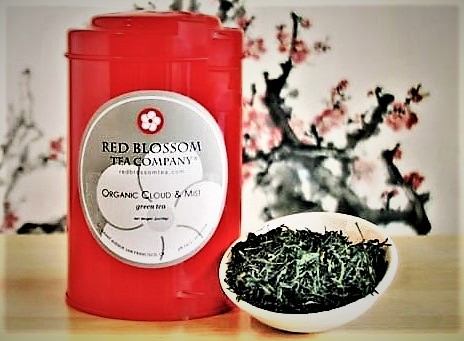
The best premium tea that I have had has been from Red Blossom Tea, a specialty company with a very nice tea store in San Francisco. Not all of their products are organic, but all the organic ones that I have tried have been really stellar. These teas are expensive enough (ranging from 3-8 times what I am paying for the Positively Tea products) that at this stage in my life they mostly fall into the gift or special-occasion categories in my mind, however.
Recently I have become interested in pu-ehr (traditional fermented tea produced in Yunnan, China), and likely will order some Pure Puer (recommended by Andrea Fabry of the It Takes Time blog) soon to give it a real try.

Tea Bags
Because tea tends to be very contaminated with pesticides and because tea bags tend to use especially poor-quality tea, I don’t think it’s a good idea to ever use non-organic tea bags.
Therefore, although I mostly just use loose-leaf tea at home, I do purchase tea bags to take with me for use in restaurants and cafes since those places rarely have organic tea available.
My favorite brand is Mighty Leaf, which features very pretty teas packaged in little net bags. The quality seems pretty good to me, and I like the fact that I can see that there are whole tea leaves or big pieces of herbs in the bags.
Note that while I am concerned about the ingredients that make up the tea pouches (which are stated by the company as being made from “polylactic acid (PLA), which is derived entirely from renewable resources, such as corn”), Dr. Mercola seems to suggest that regular tea bags can be even more toxic. I therefore figure that I might as well use the Mighty Leaf (and the teas made from the pouches actually feel fine to me).
Another brand of tea that I really like is Eden, which offers a variety of traditional Japanese flavors of bagged tea (genmaicha, kukicha, sencha and hojicha) imported from Japan.
One more brand of bagged tea that I have been fairly pleased with across the board and that is not very expensive is Choice.
On occasion, I will drink some Guayaki yerba mate (for an energy boost) or some Traditional Medicinals herbal tea.
Traditional Medicinals Herbal Teas

Coffee
Like chocolate, coffee is a product that can be substantially contaminated with ochratoxin, a mycotoxin that can cause kidney damage.
Bulletproof coffee is guaranteed to be low in mycotoxins, and it now is available in two dark roasts as well as the original medium roast. I’ve gone through a few five-pound bags of it and have liked it.
I also have done really well with the organic Mexican Chiapas coffee from Fresh Roasted Coffee, which I buy in five-pound bags through Amazon. It is currently about half the price of Bulletproof and I think that it tastes quite good (though I admit I use it mostly for coffee enemas).
Fresh Roasted Coffee’s organic Bali Blue Moon has felt good and tasted good to me too.
Issues with mycotoxin contamination of foods are so problematic in parts of Africa that I have not bought any coffee at all from there in a long time. Probably there are some parts of that continent where mold issues are much less problematic than in other parts, but I do not know which parts those are.
Although I do not think that instant coffee is ideal for any purpose, once in a while I use Mt. Hagen for drinking or coffee enemas and have done fine with it.

Alcohol & Mixers
For decades now, I have been buying Wild Turkey bourbon and doing well with it. I usually drink Rare Breed (a somewhat more expensive version), but even their regular version seems fine to me.
Recently, I decided to experiment by buying a bottle of expensive rye whisky made by another U.S. company. Although I liked the taste of it, it felt so toxic to me that I ended up pouring Thieves’ herbs into it to convert it into a cleaning/disinfecting spray. (And I will say it has worked really well for this purpose.).
One relevant fact is that Wild Turkey is one of several brands of bourbon that uses only non-GMO grains, providing a good explanation for why the corn used would not have glyphosate contamination. However, although Wild Turkey is 75% corn (grown near the distillery in Kentucky), it also contains 13% rye (sourced from Germany) and 12% barley (sourced from South Dakota).
Both of those other crops are non-GMO crops that are frequently sprayed with glyphosate in. And glyphosate is used frequently on crops in Germany (with a bunch of German beer samples recently testing positive for glyphosate cross-contamination, for instance).
Whether Wild Turkey is always as free from glyphosate contamination as it possibly could be, I don’t know. Still, it does make sense to me that it would be less toxic than an all-rye whiskey, since a high percentage of rye used in the U.S. is imported from Canada (where pre-harvest spraying of grain as a dessicant is extremely common).
I now am thinking that maybe the best bet with regard to U.S. spirits would be Buffalo Trace bourbon, since it contains 90% non-GMO corn and only 10% rye. The next time I buy bourbon, I am going to try that one.
Sometimes I also drink single-malt Scotch (as well as other European spirits products such as Hendrick’s gin, Stolichnaya vodka, Benedictine liqueur and Lucid absinthe). I’ve never had a problem with it of the sort that I did with the rye whiskey, which is a little surprising since about 30-50% of Scottish grain is treated with glyphosate as a pre-harvest dessicant. Perhaps in many cases, whisky companies in Scotland are buying grains from local farmers who do not use glyhosate in that way.
Now that I have found out what a high percentage of grain in the British Isles is sprayed with glyphosate prior to harvest (30% or more according to some accounts), I am a little surprised at how well I have done
I also have always done very well with pretty much any Japanese sake, presumably because the Japanese are very concerned about the purity of their rice and generally do not use pesticides on it.
Although I am now theoretically concerned about contamination of Japanese products with nuclear radiation from Fukushima, Japanese sake continues to feel good to me across the board.
Unfortunately, I do not do nearly as well with spirits from the U.S. as I do with ones from Europe or Japan. I am guessing that the difference is mostly due to the presence of glyphosate in the U.S. grain supply, but more stringent mycotoxin monitoring in these other countries may make a big difference too.
The one U.S. spirit brand that I always have done well with is Wild Turkey. I mostly drink Rare Breed, but even the least expensive products in their line have felt fine to me.
Very recently, I found that Wild Turkey is one of three brands of bourbon that are GMO-free (the others are Buffalo Trace and Four Roses, neither of which I have tried yet). So my affection for Wild Turkey now is making some sense to me.
Also on the mixed-drinks front: although standard mixers are really terrible (due to the presence of glyphosate-contaminated corn syrup and other problem ingredients), I was delighted to be able to start enjoying G&T’s again after discovering Fever-Tree’s line of delicious (though pricey) tonic waters and other quality mixers.
In addition, Manhattans started tasting much better to me after I substituted Urban Moonshine’s organic bitters for the Angostura bitters usually used.
Vodka often is a pretty clean alcohol, and Happy Girl Kitchen sells some outstanding tomato juice (either plain or spicy) that makes amazing Bloody Marys.
Although I have tried a variety of craft beers, for some reason I tend to do better with Blue Moon (which is owned by the huge Miller Coors Brewing Company) than most of the others. Why that might be, I am not sure. However. one rumor that I have heard is that since glyphosate can kill the yeast needed to produce beer, some breweries are testing for glyphosate in grains and rejecting crops with high levels. I wonder if high-end breweries who have more financial resources may be especially likely to do this.
The brown spots on apples used for cider are caused by a fungus making patulin, which is a pretty bad mycotoxin, and in general I don’t feel very good about most bottled apple juice or hard ciders. I’ve nonetheless done okay so far with Angry Orchard hard cider.
It has been many years since I have done well with wine, which is unfortunate since wine tasting used to be one of my favorite hobbies. I suspect that much of this is related to mycotoxin contamination, but I also have heard reports that vineyards often use glyphosate to control weeds between the rows of the vines. Although French wines tend to be a little better for me than California wines, even they are inconsistent.
Dave Asprey recently began promoting a product called Dry Farm Wines, which is labeled as organic and stated as being low in mycotoxins and other problem substances. I would really like to try it.
I also have received some positive comments about the organic and sulfite-free wines produced by Our Daily Wines and Well Read.
Stonewall Kitchen Tillen Farms is a line of non-GMO pickled produce, including asparagus, carrots, dilly beans, onions and cornichons (baby cucumbers). I found the pickled carrots to be nicely crisp but also very vinegary, and thus more appropriate as an accompaniment to, say, a rich stew than a snack to be eaten on its own or with a sandwich. Many people seem to use this company’s pickles as garnishes for mixed drinks such as Bloody Marys and so that could be another possibility.
Vodka:
Telluride Distilling Company Vodka (1)
Gin:
Peach Street Distillers Jackelope Gin (1,2)
Whiskey:
Other Spirits:
Peach Street Distillers Brandies (2)
Wine:
French Wines (2)
Sake:
Japanese Sake (2)
Beer:
German Beers (1,2)
Hard Cider:
Additions:
Happy Girl Kitchen Tomato Juices
Stonewall Kitchen Tillen Farms Pickled Vegetables (1)
Stonewall Kitchen Tillen Farms is a line of non-GMO pickled produce, including asparagus, carrots, dilly beans, onions and cornichons (baby cucumbers). I found the pickled carrots to be nicely crisp but also very vinegary, and thus more appropriate as an accompaniment to, say, a rich stew than a snack to be eaten on its own or with a sandwich. Many people seem to use this company’s pickles as garnishes for mixed drinks such as Bloody Marys and so that could be another possibility.
Links on this page are in orange (no underlining).